

This post may contain affiliate links. Read the full disclosure
Hong Kong is one of those destinations that feels mostly easy once you land, and in a lot of ways it is. But there are still things worth knowing before you go, especially if it’s part of a bigger trip through the region.
We were lucky because Simon had visited once before for work, so we weren’t going in completely cold. Even so, there were small things that caught us off guard, and after coming straight from mainland China, the contrast was something else entirely.
The language barrier is far less than visiting mainland China, but it’s still there at times once you step away from the main tourist areas. Overall though, Hong Kong is one of the more accessible Asian cities for English-speaking travellers.
So if you’re planning a trip to Hong Kong, here’s what we’d want you to know before you go.
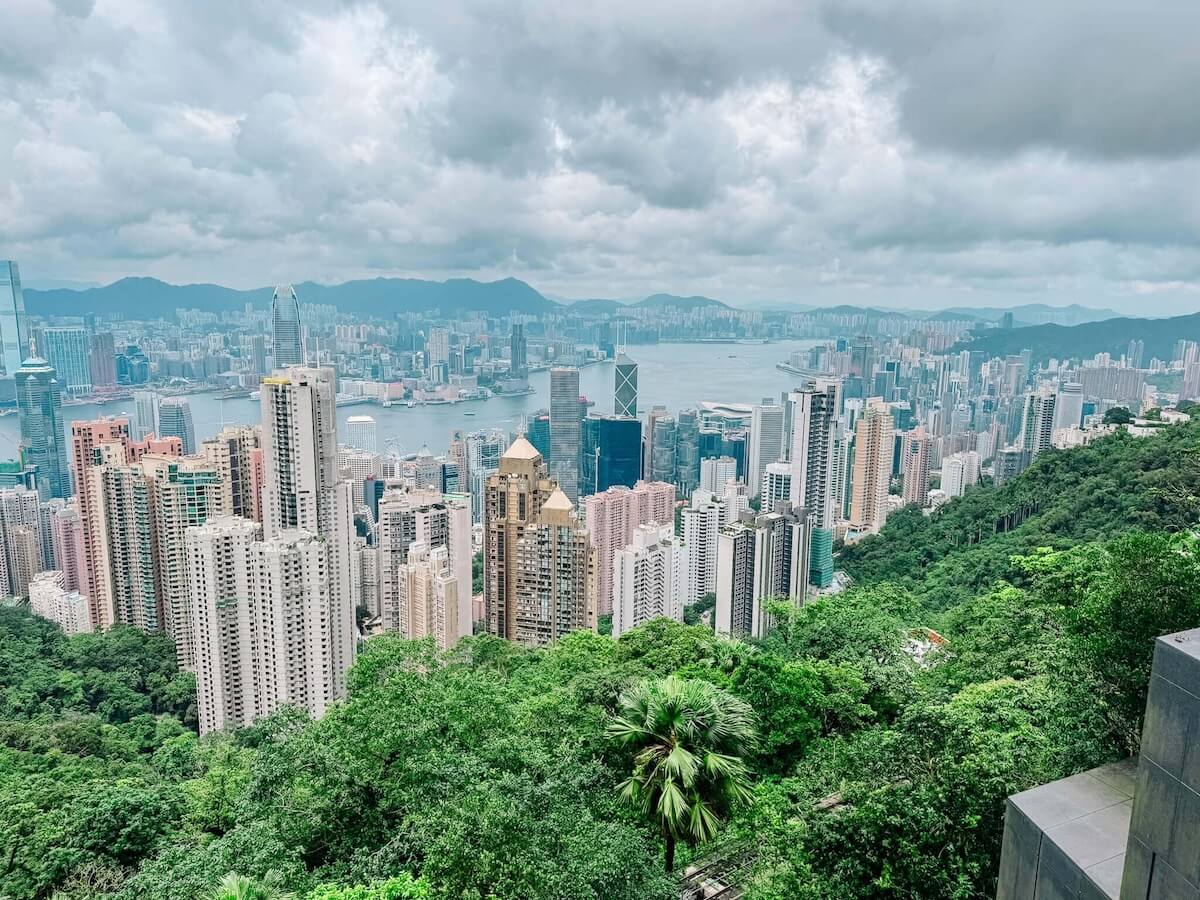
Quick Hong Kong Travel Tips
- Check your visa-free entry length before booking
- No VPN needed, Hong Kong has its own internet completely separate from mainland China
- Get an eSIM before you arrive
- Pick up an Octopus card for the MTR, buses, trams and ferries
- Service charge is usually already added to bills, so tipping isn’t expected
- November to April is the most comfortable time to visit
- Always carry a small umbrella or pack a rain jacket
Entry and Arrival Tips
Check Your Visa-Free Entry Length
Australian passport holders and those in many other countries get 90 days visa-free for tourism. No visa required.
Visa-free entry lengths vary significantly by nationality, so if you’re not on an Australian passport, check the current rules for your specific country before booking. Some nationalities get 14 days, others up to 180.
- Passports need at least 6 months’ validity from your arrival date
- Be ready to show proof of onward travel if asked at immigration
- Immigration at Hong Kong airport is generally very smooth and fast compared to a lot of other major airports
Hong Kong Has Completely Separate Immigration From Mainland China
If your trip includes mainland China as well as Hong Kong, this is important to understand. Hong Kong is a Special Administrative Region with its own immigration system. Entering Hong Kong doesn’t give you access to mainland China and vice versa.
If you need a visa for mainland China, that’s a separate process from your Hong Kong entry.
Overall the immigration process in Hong Kong is easy and well organised. We didn’t have any issues.
Getting From the Airport to the City
Hong Kong International Airport is on Lantau Island, which is also where Disneyland is located. How you get from the airport to where you’re staying depends on your destination.
Airport Express train is the fastest and easiest option if you’re heading into the city. It connects the airport directly to Hong Kong, Kowloon and other central stations in around 24 minutes. Worth it for the speed and the ease.
Bus is cheaper and covers more destinations including areas the train doesn’t reach directly. Takes longer depending on traffic.
Taxi is easy to find at the airport and straightforward if you have a lot of luggage or are heading somewhere with an awkward connection. More expensive than the train.
We headed straight to Lantau Island for Disneyland, so our experience was different to the standard airport-to-city journey. We waited for a bus but it took too long, so we got a taxi.
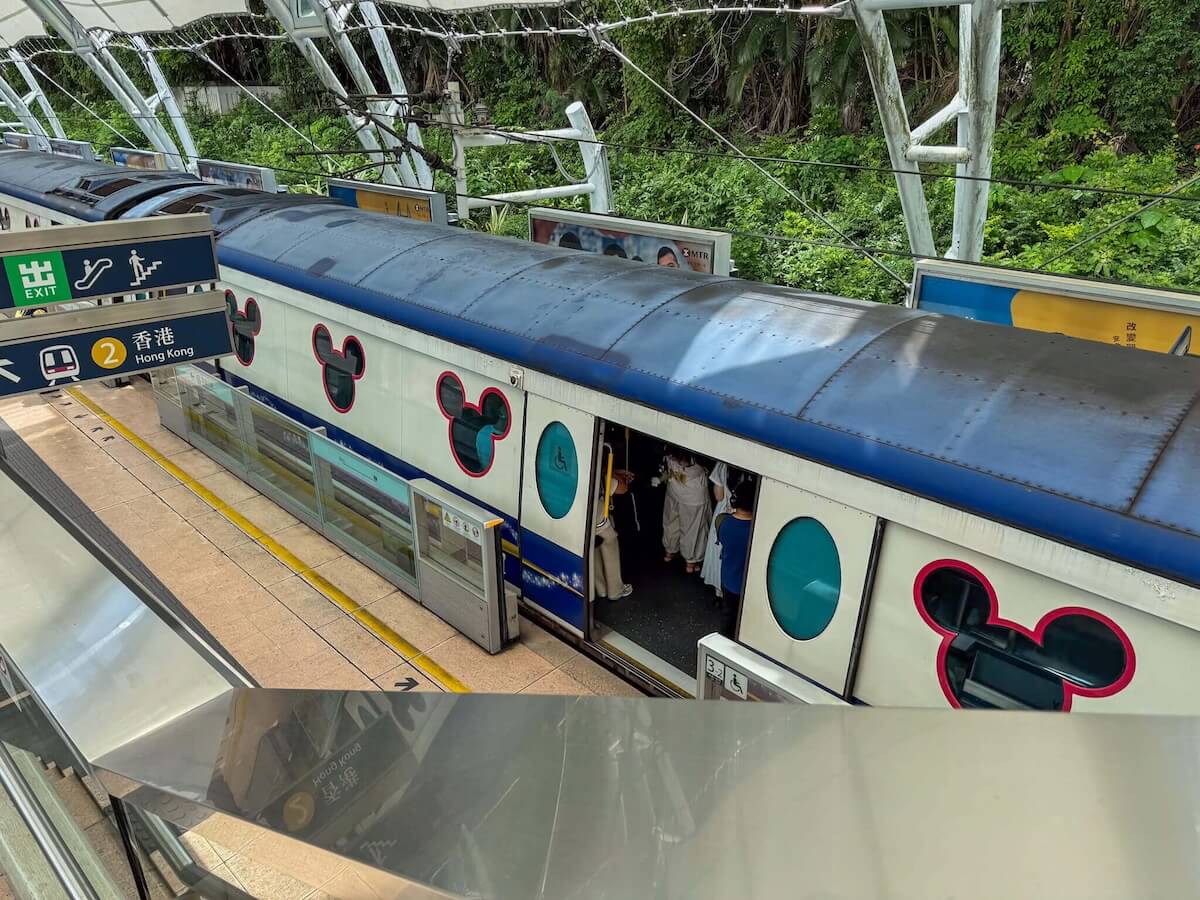
If you’re going that direction, the Disney Resort line connects from Sunny Bay station on the MTR.
You can check options with Welcome Pickups for a smooth arrival experience.
How Many Days Do You Need in Hong Kong?
We didn’t have enough time in the city and it’s our biggest regret from this part of the trip. We’d suggest at least 4 to 5 full days to do Hong Kong justice, and you could comfortably fill a week if you wanted to go slower.
A few days gives you time for Hong Kong Island, Kowloon and a day trip or excursion without feeling like you’re racing through a checklist.
If you’re only there for 1 or 2 days, prioritise the harbour views (Star Ferry across is the best way to experience this), Victoria Peak for the panorama, and dim sum at least once. But really, plan for more time if you can.
Apps and Connectivity Tips
No VPN Needed Here
Coming from mainland China, this felt like a genuine relief. Hong Kong is not behind the Great Firewall. Google Maps, WhatsApp, Instagram and all your usual apps work completely normally. No VPN, no workarounds, no stress.
Get an eSIM Before You Arrive
Having data from the moment you land makes a big difference, especially for navigation across the MTR, hills and ferry routes.
We use Airalo for our eSIMs when we travel and it worked perfectly throughout Hong Kong for Simon. I tried a different brand this trip and had issues with it, which was a good reminder not to stray from what works. If you want our recommendation, go with Airalo.
Getting Around Hong Kong
Understand the Layout First
This didn’t come as a surprise during the trip itself, but I’m not sure I fully understood how Hong Kong was laid out until I started planning. It helped to know this before we arrived.
Hong Kong has three main areas you’ll spend time in:
- Hong Kong Island, the main island with Victoria Peak, the central business district and a lot of the iconic views
- Kowloon, the peninsula on the mainland side of the harbour, connected by the MTR and the Star Ferry, and home to areas like Tsim Sha Tsui and Mong Kok
- Lantau Island, where the airport, Disneyland and some of the larger resort hotels are located
Getting between them is very straightforward. The MTR connects it all and is one of the easiest metro systems we’ve used anywhere.
Get an Octopus Card
The Octopus card is Hong Kong’s tap-and-go payment card for the MTR, buses, trams and ferries. It also works at a lot of convenience stores and cafes. Pick one up at the airport or any MTR station and top it up as you go.
We didn’t get one because we only had one day planned in the city itself. For the most part we managed fine using credit cards, but we did run into an issue when a small local bus only accepted Octopus cards, not credit cards.
The larger buses and the MTR accepted tap and go with credit cards, but if you’re planning to use local buses at all, an Octopus card saves you the hassle.
The MTR Is One of the Best Metro Systems We’ve Used
Hong Kong’s train network is fast, clean, air-conditioned and has English signage throughout. It really is one of the most streamlined metro systems we’ve ever used in any country. Part of that is because Hong Kong isn’t huge and the number of lines is manageable rather than overwhelming.
If you have a lot of luggage, consider a taxi instead. A lot of the taxis are on the smaller side and fitting bags in can be tricky.
The Star Ferry Is Worth It Just for the View
Crossing the harbour between Hong Kong Island and Kowloon on the Star Ferry costs next to nothing and gives you one of the best views in the city. It’s worth taking even if the MTR would get you there faster.
The harbour view at any time of day is one of those things that makes you understand why people love Hong Kong.
The Peak Tram Tip Nobody Tells You
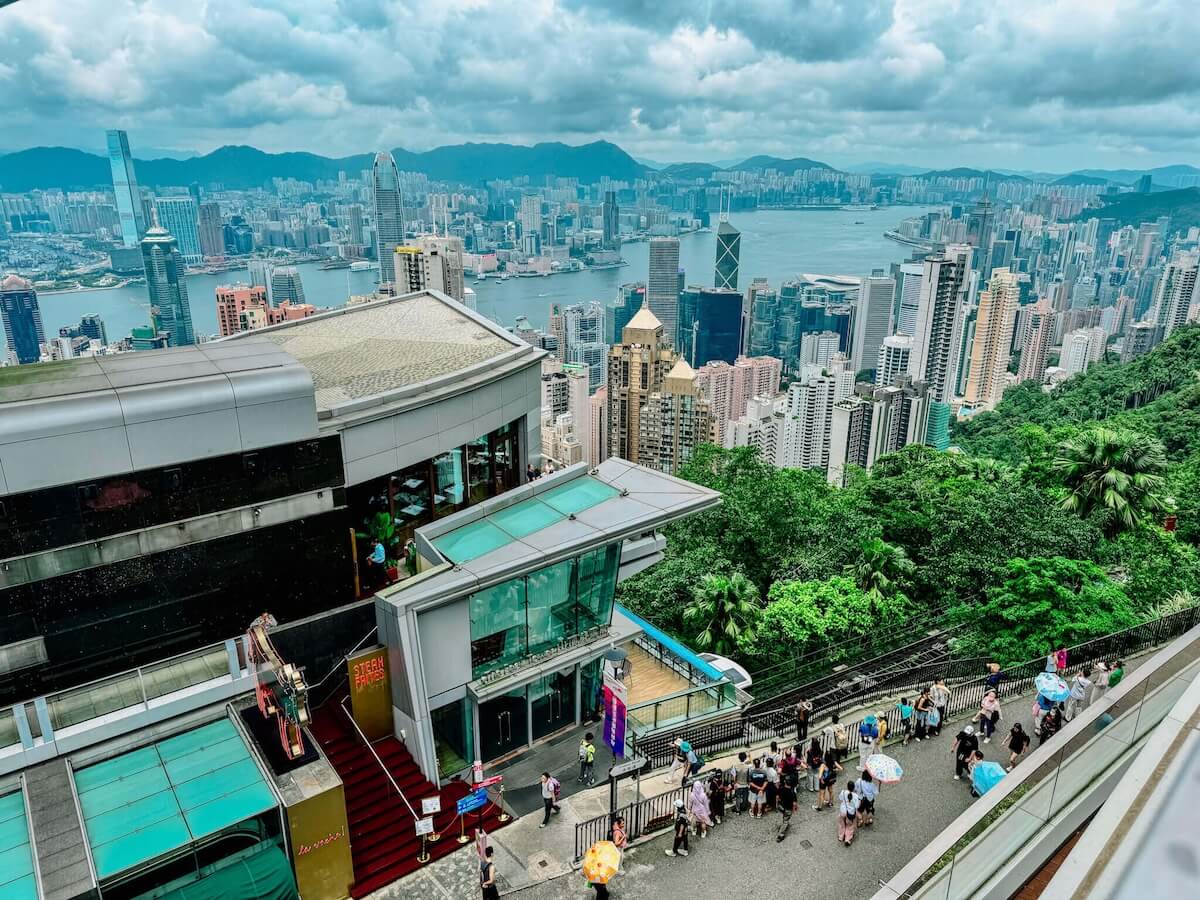
The Peak Tram up to Victoria Peak is iconic and the views at the top are worth the trip. But the tram is expensive and the queue can be very long, particularly during peak times. Like excessively long…
What we did: caught the local bus up to the Peak and took the tram back down. The bus is a fraction of the cost and the queue for the tram going down is considerably shorter than going up. We avoided the long wait, saved money and still got the tram experience. Worth considering.
Also, don’t bother paying for the observation deck. There’s a free view on top of the Peak Galleria shopping centre which may not quite be 360-degrees like Sky Terrace 428 but still an amazing view.
The Escalators Are Something Else
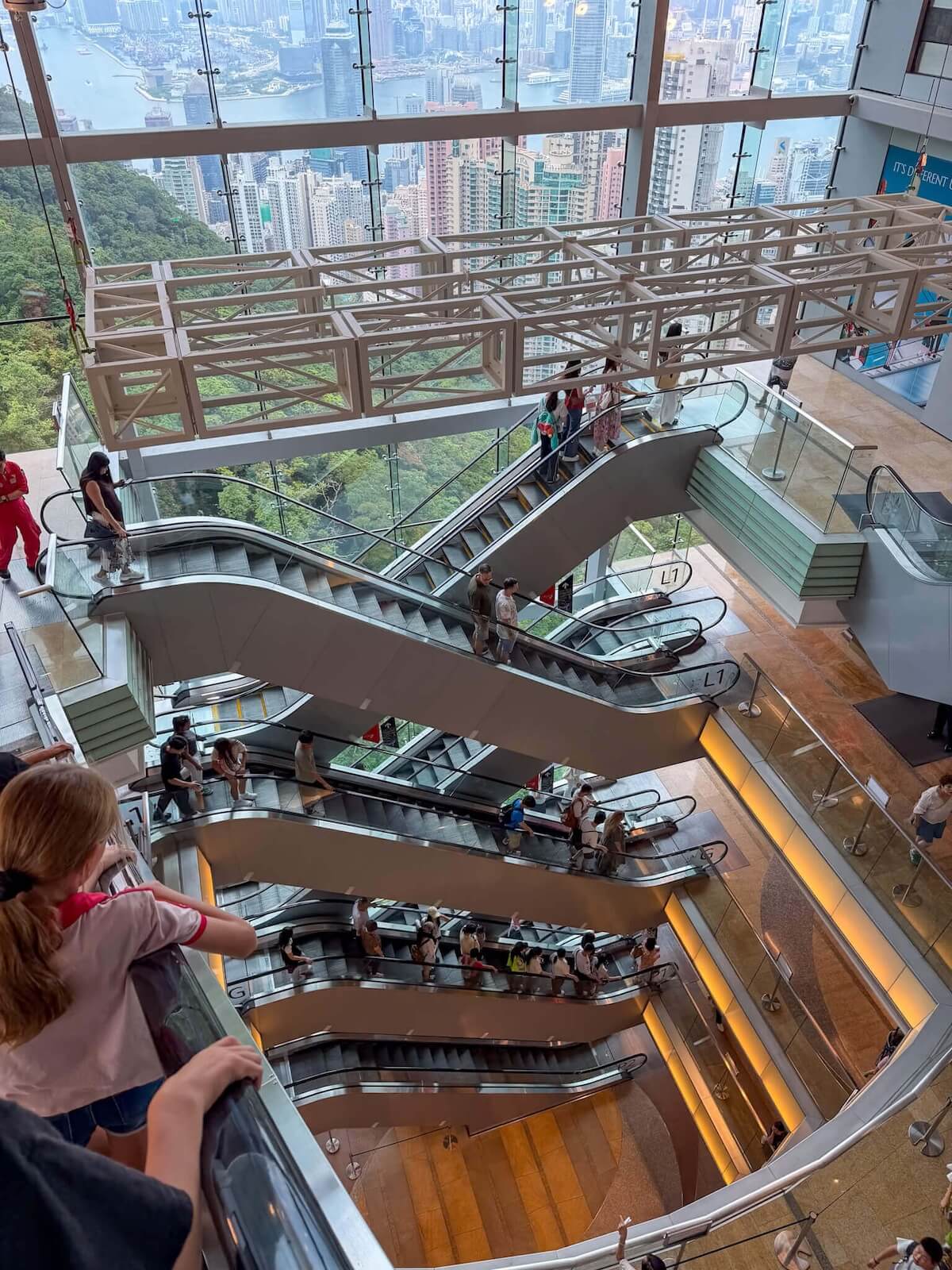
If you’re anywhere near the Mid-Levels area on Hong Kong Island, keep an eye out for the escalators. I’m honestly not sure I’ve ever seen escalators that tall anywhere else in the world. They’re functional but also a bit of an experience in themselves.
The ones in the Peak Galleria have some epic views of Hong Kong city.
Money Tips
The Currency Is the Hong Kong Dollar
Hong Kong’s currency is the Hong Kong dollar (HKD). Download an app like XE for on-the-go currency conversions.
You can withdraw HKD from ATMs at the airport on arrival. Cards are widely accepted across hotels, restaurants and shops, so you won’t need large amounts of cash.
Hong Kong Is Expensive
Let’s be upfront about it. Hong Kong is one of the more expensive cities in Asia. Accommodation in particular is pricey, especially close to the harbour or in central areas. And of course, at Disney. We stayed at Disneyland Hollywood Hotel.
Dining ranges from extremely affordable at street level and in local dai pai dong food stalls, up to very expensive at hotel restaurants.
Budget accordingly and know that you can eat well cheaply if you’re happy to eat where locals eat.
Cards Are Widely Accepted, But Carry Some Cash
Most places in Hong Kong take credit cards or Octopus, but smaller shops, markets and local restaurants are sometimes cash-preferred. Having a small amount of HKD on hand is useful.
Honestly, we could have done without the cash entirely for our trip. We thought that visiting Ngong Ping, we might need it. We didn’t really.
Tipping Isn’t Expected
A service charge is often already included in restaurant bills, sometimes up to 10%. Tipping on top of that isn’t part of the culture here.
Food Tips
Hong Kong Is a Food City
This is something that should be higher on every travel planning list for Hong Kong. The food scene is extraordinary, affordable at the right places and very different to what most Western travellers are used to.
Simon works in the meat industry, so his first visit to Hong Kong was all the fine dining establishments. A very different experience to our more budget family trip of Hong Kong.
A few things worth trying:
- Dim sum is the big one. A traditional dim sum breakfast or lunch at a local restaurant (not a tourist-facing one) is one of the great food experiences of the region. Go with a group if you can, order lots of small dishes and just keep going.
- Egg waffles (gai daan jai) are the street snack most people associate with Hong Kong. They’re a grid of round-bubbled waffles, slightly crispy on the outside and soft inside. Get them from a street stall.
- Wonton noodle soup is simple, warming and worth seeking out at a local noodle shop rather than a restaurant
- Hong Kong milk tea is its own thing. Strong, silky from the evaporated milk and different to any other milk tea in the region. Available at most local cafes (cha chaan teng).
- Pineapple buns (bolo bao) have no pineapple in them. The name comes from the pattern on the sweet, slightly crispy top. Best eaten warm with a slab of butter (but honestly quite over-rated).
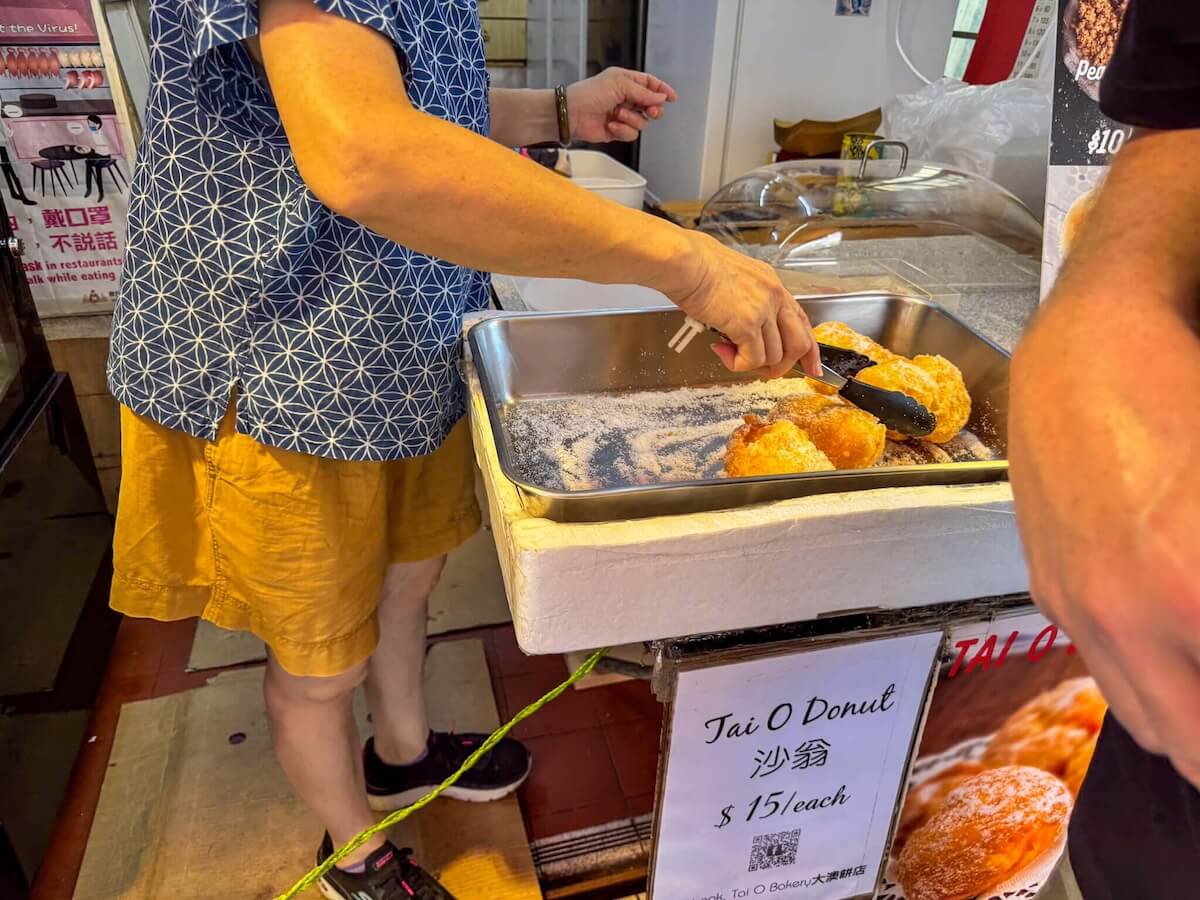
And if you visit the historic fishing village of Tai O on Lantau Island, make sure you try the Tai O Bakery donuts, served hot with ice cream. The fish balls are another popular choice.
Weather and Packing Tips
When to Visit Hong Kong
November to April is the sweet spot. Cooler temperatures, lower humidity, less rain and far more pleasant for walking around.
May to September is hot, very humid and typhoon season. We visited in the middle of summer and the humidity was relentless. Not impossible but noticeably more draining. Everything takes more out of you in that kind of heat, especially with kids.
October is transitional. Still warm but starting to ease off. Can still get rain.
Always Pack a Rain Jacket or Small Umbrella
Sudden downpours happen year-round in Hong Kong, not just during typhoon season. A compact umbrella or packable rain jacket takes up almost no space and saves you constantly.
The best thing about a compact umbrella is it doubles as shade on hot days too. A popular option for locals.

Pack Layers Even in Summer
Air conditioning in Hong Kong is set extremely cold almost everywhere indoors. Malls, restaurants, the MTR, hotel lobbies. Moving between the outdoor heat and indoor chill is constant. A light cardigan or layer in your bag makes a real difference.
Safety in Hong Kong
Hong Kong is very safe for tourists. It consistently ranks among the safest cities in Asia. Violent crime is rare, and you can walk around most areas at any time of day or night without concern.
Standard common sense applies: keep an eye on your belongings in crowded markets and busy areas. But overall, safety is not something you’ll spend much mental energy on here.
We felt very safe visiting Hong Kong with kids.
This is one thing we never travel without
Travel insurance is one of those things you hope you never need — but it’s absolutely worth having, especially when travelling with kids. For flexible coverage, we’ve used SafetyWing, and World2Cover through Klook is another solid and affordable option.
Tips for Visiting Hong Kong With Kids
The Hills and Stairs Are Everywhere
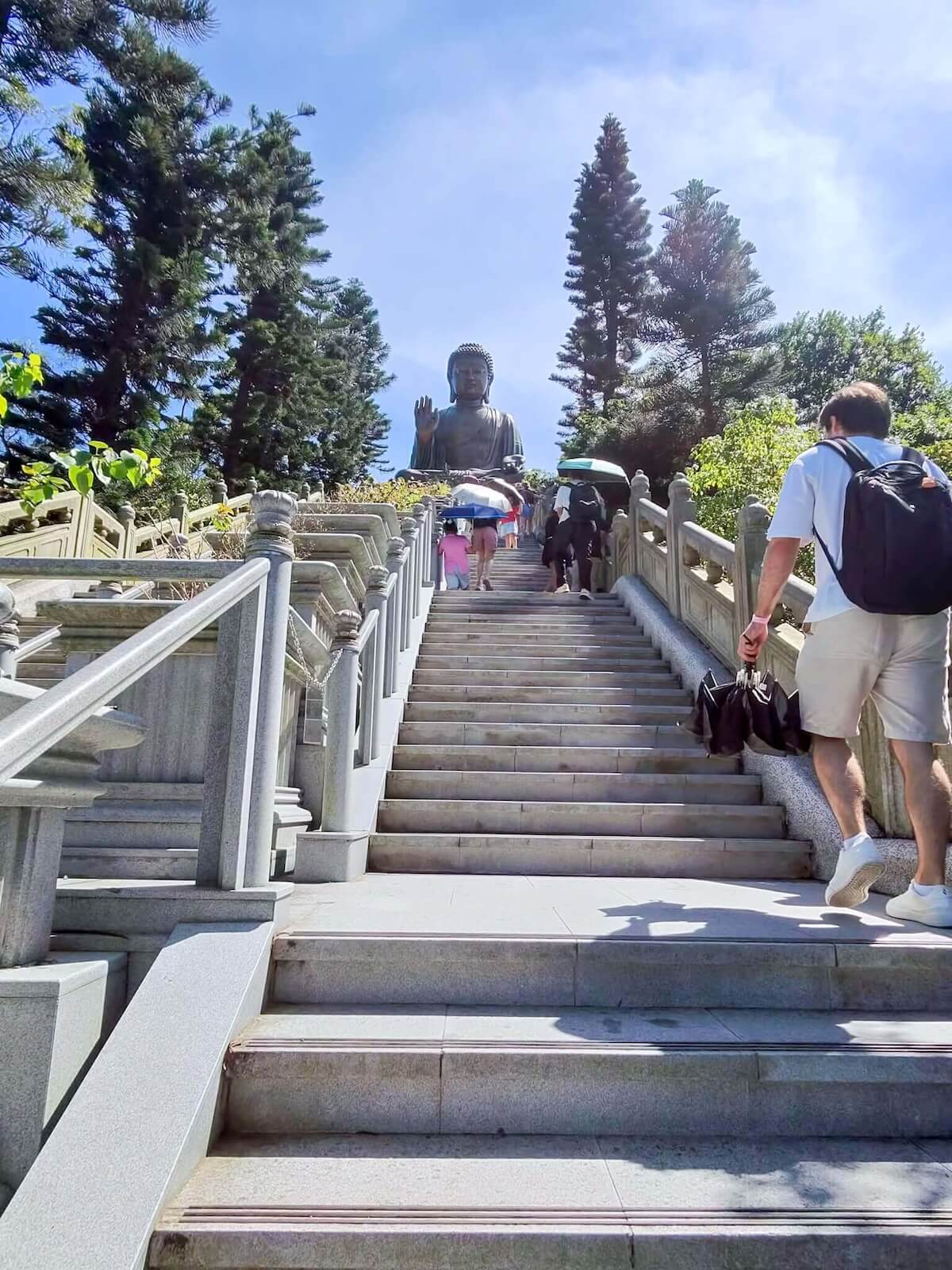
Hong Kong is built on very steep terrain. A lot of the interesting areas involve stairs, escalators and sloped streets. If you have a stroller or young kids who tire quickly, factor this into how much you plan each day.
It’s manageable but something to think about when building your itinerary. A baby carrier may be better suited if visiting Hong Kong with a baby.
Build in Air-Conditioned Breaks
Between the heat, the hills and the walking distances, planning a midday break somewhere cool makes a noticeable difference with kids. A mall, a museum or back to the hotel for a couple of hours works well and lets everyone reset before the afternoon.
Where to Stay With Kids
For most families visiting Hong Kong as a city trip, Kowloon offers good value compared to Hong Kong Island and puts you within easy reach of the Star Ferry crossing, plenty of food options and good MTR connections.
If you’re primarily visiting Hong Kong Disneyland, Lantau Island makes logistical sense for the park days. But for exploring the city, you’ll be commuting in each day which adds time.
We stayed on Lantau, at Disney’s Hollywood Hotel, because Disneyland was our priority, but for a pure city trip, we’d base ourselves in Kowloon.
What Surprised Us Most
The MTR was so easy to navigate. We’ve used metro systems all over the world and this is one of the best.
Clean, fast, well-signed in English, and not as complex as the networks in some bigger cities. It covers almost everywhere you’d want to go and the connections work seamlessly.
Also the Disneyland Resort Line is soooo cute! The train has Mickey shaped windows, couch-style seats and decorations.
The layout of Hong Kong also made more sense once we were there than it did from looking at a map. Three distinct areas connected by very efficient transport. Once you understand that, navigating the city becomes much easier.
What We Would Do Differently
We would spend more time in the city. We had one day planned for Hong Kong itself and that was not enough. Partly it was due to it being the end of an almost 3 week trip and our youngest wasn’t well. This meant cutting some of our city time shorter.
Four to five full days minimum is what we’d book next time, possibly a full week.
More time would also mean basing ourselves in the city rather than on Lantau Island for the whole stay.
Lantau made sense for the trip we did because Disneyland was the priority. But for most people visiting Hong Kong, staying on the island or in Kowloon will give you a much richer experience and access to the city’s main attractions.
FAQ: Hong Kong Travel Tips
Do I need a visa to visit Hong Kong?
Australian passport holders get 90 days visa-free, no visa needed. Other nationalities vary quite a bit, anywhere from 14 days to 180 days, so check the current rules for your own passport before you book.
Is Hong Kong part of mainland China for visa purposes?
No. Hong Kong has its own completely separate immigration system. Entering Hong Kong doesn’t give you access to mainland China, and a China visa doesn’t cover Hong Kong. If your trip includes both, you need to account for two separate entries.
Do I need a VPN in Hong Kong?
No. Unlike mainland China, Hong Kong is not behind the Great Firewall. All your usual apps, Google, WhatsApp, Instagram, work completely normally.
What’s the easiest way to get around Hong Kong?
The MTR is the easiest option for most journeys. An Octopus card makes it even simpler since you can tap on and off without worrying about buying individual tickets. Credit cards also work on the MTR and larger buses if you don’t get an Octopus card, but small local buses can be Octopus-only.
Is Hong Kong good for travelling with kids?
Yes, Hong Kong is family-friendly. The MTR makes getting around with kids very manageable. The main things to factor in are the heat (especially in summer), the hilly terrain and the walking distances between attractions. Build in rest breaks and you’ll be fine.
How many days do you need in Hong Kong?
We’d say four to five full days as a minimum for a proper city experience. One or two days is enough to see the highlights but you’ll feel rushed. A week lets you go at a comfortable pace.
Plan Your Trip
Here are a few things we always organise before travelling:
- Stay connected: We use Airalo eSIM
- Car hire: Compare options with DiscoverCars
- Travel insurance: Check SafetyWing or World2Cover via Klook
- Airport transfers: Book with Welcome Pickups
- Accommodation: Find the best deals here
- Tours: We always use GetYourGuide