

This post may contain affiliate links. Read the full disclosure
Planning a trip to China is exciting, but I’m going to be upfront with you: it was one of the most challenging trips we have ever taken as a family. And we usually have very little trouble no matter the destination.
That’s not a reason not to go. It’s one of the most incredible countries we’ve ever visited, but we would still go back!
But the planning is different to almost anywhere else, and there were moments, like the terrifying realisation that our payment apps weren’t properly verified when we actually needed them, where we were very grateful we’d done as much preparation as we had.
We visited Shanghai with our two teenage daughters as part of a wider Asia trip that also included Macau and Hong Kong, and these are the things we really wish we’d known before we landed.

Quick China Travel Tips
- Get an eSIM with a built-in VPN
- Download AND fully verify Alipay, WeChat, Amap and Didi before you leave home
- Check every power bank has a CCC certification mark
- Carry your passport everywhere
- Check your visa-free entry eligibility before booking
- Be prepared for crowds and very different social norms around queuing
- Have a translation app and know how to use it
When To Visit China
Spring and Autumn Are The Sweet Spots
If you have flexibility on timing, aim for April to May or September to October. The weather is more manageable, the skies are clearer, and you won’t be melting or freezing.
Summer (June to August) is hot, extremely humid and peak domestic tourist season. We visited in July, and the heat combined with the crowds made everything so much more draining than it needed to be. Not impossible, but factor it in when you’re planning how much to fit into each day.
Winter (December to February) gets cold quickly depending on which part of China you’re in. Northern China is very cold in winter with snow but Southern China is mild and warm.
Avoid These Dates If You Can
- Golden Week (first week of October) and Chinese New Year (late January or early February) are the two periods when China’s domestic tourism absolutely explodes. Attraction queues, transport and hotel prices all spike dramatically. Shanghai Disneyland during Golden Week, for instance, is reportedly a completely different experience to a regular day.
- Public holidays generally bring large crowds to all major attractions. Check the Chinese public holiday calendar before booking your specific dates.
Apps & Connectivity Tips
Get An eSIM With A Built-In VPN
Google, Google Maps, WhatsApp, Instagram, Facebook and most messaging apps are blocked in mainland China. Assume none of it works unless you plan around it.
The easiest fix is an eSIM with a built-in VPN, rather than setting one up yourself once you land. Many standalone VPN apps are also blocked or unreliable inside the country, which is a frustrating catch-22 if you haven’t sorted it before you fly.
We used Airalo and Holafly. Overall, Airalo has always been the most reliable eSim we’ve used when travelling (Holafly glitched both times we crossed to Macau). It allowed access to most things, but some apps still didn’t load properly, like TikTok, but that wasn’t a big issue.
Download And Fully Verify These Apps Before You Leave Home
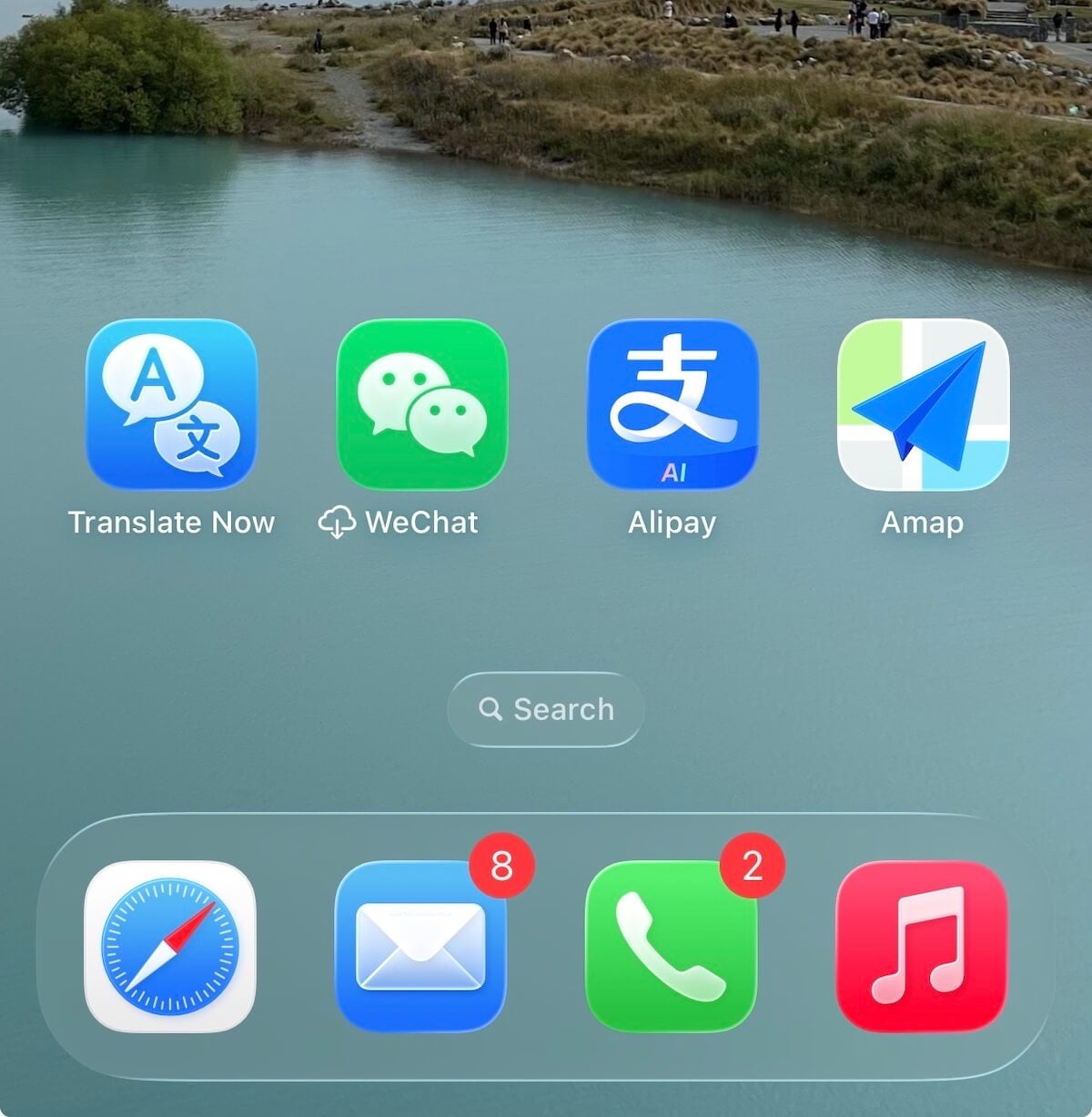
China runs on a handful of “super apps” and without them, day-to-day things like paying for a meal or booking a car get difficult. The key word here is fully verify, not just download.
- Alipay – the main payment app. China is largely cashless and a lot of shops, market stalls and even attractions only take Alipay or WeChat Pay. Link your international card and confirm it’s working before you go.
- WeChat – used for payments as well as messaging. Some venues only take WeChat Pay, not Alipay, so it’s worth having both set up.
- Amap (Gaode Maps) – Google Maps doesn’t work properly in China. Amap is the local equivalent and far more accurate for navigation and public transport.
- Didi – China’s ride-hailing app, the equivalent of Uber. More on this below.
- Apple Translate (or your preferred translation app) – invaluable for menus, signs and conversations. Download the offline Chinese language pack before you go so it works without data if you don’t have an unlimited eSim plan.
Set Everything Up While You Still Have Your Home SIM
This is the most important tip in this entire post and we learned it the hard way.
Setting up Alipay, WeChat and Didi often requires a verification code sent by SMS to your home mobile number. Once you’ve switched to an eSIM, that number isn’t reachable. So if you wait until you’ve landed to finish the setup, you can get completely stuck.
We thought we had everything sorted before we left. We didn’t.
Our Alipay and WeChat looked set up, but the payment wasn’t fully linked and verified, and we found out when we tried to book a Didi and the payment declined. We were already on our eSIMs at that point with no access to SMS verification.
Our saving grace was having a friend back in Australia act as our verification code person. She’d receive the SMS on our behalf and send it to us. It sounds ridiculous but it worked, and we were very grateful to have thought of it beforehand.
If you don’t have someone who can do this for you, sort every single verification step before you leave home while your regular SIM is still active.
We even tried testing it out in Singapore earlier in our trip but it came up with an error stating it would only work in mainland China which had us nervous before we even arrived.
The other roadblock was that we couldn’t do that with credit card verifications. They are linked to your home mobile number, so thankfully we have a Wise account which ended up being the easiest thing to link for DiDi and AliPay payments.
Explore The Apps Before You Leave Home
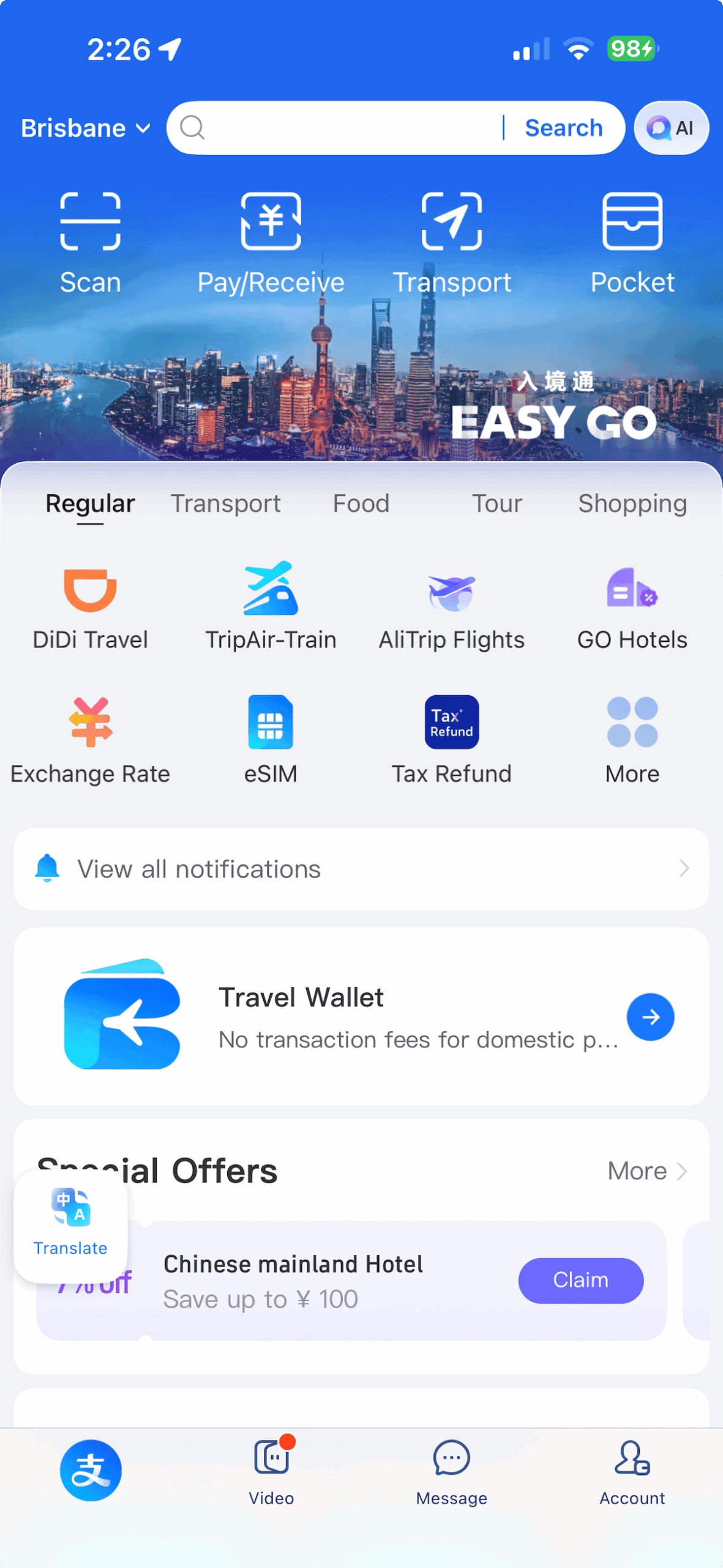
This one should go without saying but in case you’re just checking off boxes, don’t forget to actually have a bit of a play around inside WeChat and Alipay. Knowing how to navigate the apps will make your life easier when you visit China.
Alipay even has a Tiktok style app built in which you see so many people on public transport watching videos.
One thing that can be overwhelming is knowing how to pay for things when you’re in China. The best rule of thumb with either of the two payment apps, if there isn’t a QR code, click the Pay/Receive option in the app. If there is a QR code, usually for smaller stalls and markets, click the scan code to pay.
A good way to think of it is that it is a little like using Apple Pay. Say that that was your only option and you couldn’t use individual cards… just whatever is linked to your Apple Pay or Google Pay. That… but with a whole lot of other options, such as rideshare, hotel bookings, attractions, and messaging all in one app.
The Great Firewall Affects More Than Social Apps
It’s not just Instagram and WhatsApp. Gmail, Google Maps and their whole suite, some banking sites and parts of app stores can be patchy too.
Download anything you’ll need offline before you leave home: maps, translation language packs, entertainment for the kids, any documents you might need to access.
An eSim with a built-in VPN allows you to access most of these things while in China but it’s a little unreliable, so aim not to rely on them.
Even something as simple as accessing your Netflix might not be possible depending on what plan you’re on. The basic plan is only for your home country.
Use Didi To Get Around
Didi is how many people get around Chinese cities and it is extremely cheap by Australian standards. A ride that would cost you $20-30 in Sydney or Brisbane can be a fraction of that in Shanghai.
When you have luggage, are crossing multiple metro lines, or are just tired after a full day at a theme park, Didi is often the easier and more practical option than working out the public transport.
We used it regularly, and it became one of our most-used tools on the trip.
IMPORTANT TO KNOW: On two occasions our driver needed the last four digits of the phone number on the Didi account to confirm the booking, which was our friend’s Australian number since that’s what we’d used for setup.
The language barrier made explaining this extremely difficult in the moment. We eventually figured it out, but it caused some stress. It doesn’t happen every time, but it’s worth knowing it can come up.
Money & Cashless Travel Tips
China Is Almost Entirely Cashless
Most payments, shops, taxis, street stalls and attractions go through Alipay or WeChat Pay. Cards are rarely accepted outside of international hotels.
This is not like going cashless in Australia, where you can usually fall back on a card. If your apps aren’t working, you have very limited options.
This is why getting everything properly set up before you arrive matters so much. When it works, it’s seamless. When it doesn’t, it’s very stressful.
Research The Places You Are Going Before Exchanging Cash
Even in a cashless country, the odd public toilet, market stall or locker will only take coins or notes. A small amount of RMB is worth having in your wallet just in case for longer stays and if you are visiting more traditional parts of China.
But do your research before you visit to see if this is the case for your itinerary.
In Shanghai, we managed an entirely cashless trip. Even visiting Zhujiajiao water town was fully cashless with Alipay and WeChat.
Getting Around Tips
Public Transport Is Good But The Language Barrier Is Real
Shanghai’s metro system is extensive and well-organised. In theory it’s very usable for tourists.
In practice, the combination of the language barrier and our app anxiety made us nervous about using it, particularly in the early days of the trip before we felt settled.
We used Didi far more than public transport and don’t regret it given the cost. But if you’re comfortable navigating foreign metro systems and have Amap set up properly, Shanghai’s public transport is reliable and cheap.
Book Attractions In Advance

Popular attractions in China have limited daily ticket numbers and sell out, sometimes well in advance during busy periods.
Unless you are using an attraction aggregator site such as GetYourGuide (we use this most) or Klook (our second favourite), you may find you also need Alipay for booking these in advance too.
Note: Some attractions also require passport details at the time of booking, not just on arrival.
Shanghai Disneyland is one example: we needed full passport details for every family member when purchasing tickets online. This caught us slightly off guard with how early we had to have that information ready. Check the booking requirements for each attraction before you go rather than assuming you can buy on the day.
Some Chinese attractions don’t allow online booking by foreign visitors at all and require purchasing tickets on-site. It’s worth researching this individually for any attraction on your list.
Why We Book Tours With Get Your Guide
We have used Get Your Guide as our trusted online booking system for tours around the world! We almost always book our tours using GYG for a couple of reasons:
- Free cancellation on most tours – Most tours on Get Your Guide allow you to cancel and get a full refund up to 24 hours in advance. This is great if plans change, or if booking an outdoor activity, the weather forecast is looking poor.
- Reserve now, pay later – You can secure many of the most popular tours well in advance and not pay until closer to the day of the tour.
- Pay in your chosen currency – Avoid costly international transaction fees by choosing to pay in your home currency.
- Peace of mind – This online marketplace holds tour operators accountable with a written description of inclusions as well as the opportunity for customers to leave reviews, which helps you choose a reliable tour operator.
Passport & Entry Tips
Carry Your Passport Everywhere
Your passport is not just an entry document in China. You need it constantly.
- Hotel check-in requires it, with registration at the local Public Security Bureau within 24 hours of arrival (chain hotels handle this automatically, but double-check smaller or non-chain accommodation before booking)
- High-speed rail checks your passport at security and again at boarding
- Online ticket purchases for attractions often require your passport details upfront
- Passports need at least 6 months’ validity from your entry date
We stayed at an Airbnb apartment for 2 nights in Shanghai, and since there was no in-person check-in, we had to provide photos of each of our passports via WeChat for them to process at their end before they provided us the door code.
Check Your Visa-Free Entry Eligibility
Visa rules for China have changed significantly in recent years, so always verify before booking rather than relying on outdated information. As of 2026:
- Australia, UK, Canada and most of Europe get 30 days visa-free entry for tourism. No visa required. The UK and Canada were added to this list in February 2026, so some older posts still show them as requiring a visa. They don’t anymore.
- US passport holders don’t have full visa-free entry but can use the 240-hour (10-day) transit policy if China is part of a multi-country trip, with the requirement that your onward destination is a truly different country or region to where you arrived from. Hong Kong, Macau and Taiwan count as separate regions for this purpose.
- Rules change regularly. Always check the current list for your specific passport before booking, including this post.
The Language Barrier
English Is More Limited Than You Might Expect
We had been to Japan, where we also don’t speak the language, and managed fine. China was different.
Even in Shanghai, one of China’s most international cities, English is very limited once you step away from the hotel lobbies and main tourist attractions. And even then, few people speak fluent English.
Menus, transport staff, Didi drivers, market vendors, even some theme park staff: don’t count on being able to communicate easily.
We used translation apps constantly. Even then, you sometimes get an answer that doesn’t quite make sense or feel complete, and you’re left wondering if something was lost in translation.
It’s not the app’s fault. Mandarin is a tonal language and direct translation doesn’t always capture what’s actually being said.
I spent two months learning Mandarin on Duolingo before the trip. I won’t say it was completely useless, but I’d be exaggerating if I said it helped me much in practice. Mandarin is one of the hardest languages for English speakers, and you’re not going to reach a functional level in two months. What it did do was help me recognise a few characters and feel slightly less lost looking at signs.
👉 The most practical things you can do: download the offline Chinese language pack for your translation app, save your hotel address and key destinations in Chinese characters on your phone (screenshots are great for this) to show to drivers and locals.
A Few Basic Mandarin Phrases Are Still Worth Knowing
You don’t need to be fluent. But a few words go a long way for goodwill:
- Nǐ hǎo (nee how) – hello
- Xièxie (sheh-sheh) – thank you
- Duōshǎo qián (dwor-shaow chyen) – how much does this cost?
- Wǒ bù dǒng (wor boo dong) – I don’t understand
People appreciate the attempt, even when your pronunciation makes them smile.
Cultural Differences Worth Knowing
Crowds and Queuing Are Very Different

This was probably the biggest cultural adjustment of the whole trip and one that no amount of reading fully prepares you for.
China is very peopley. Major tourist sites, theme parks, transport hubs and popular restaurants are busy in a way that can feel overwhelming, particularly in summer heat. And the social norms around queuing are simply different to what we are used to in most Western countries.
People push into lines. It happens constantly, and it happens without any apparent awareness that it might be considered rude.
We saw it everywhere, including at Shanghai Disneyland where families, mothers with young children included, would push directly into the queue in front of us. It shocked us, not because anyone was aggressive about it but because it’s so far outside what we’d consider normal behaviour at home.
This is not a complaint about Chinese people. It’s a cultural norm, not a personal affront. But if you go in expecting your home queue etiquette, you’ll spend a lot of energy being frustrated. Go in knowing it’s different, and it’s much easier to let go.
Spitting on the ground is also common. Gross but again, just something to be aware of.
This is one thing we never travel without
Travel insurance is one of those things you hope you never need — but it’s absolutely worth having, especially when travelling with kids. For flexible coverage, we’ve used SafetyWing, and World2Cover through Klook is another solid and affordable option.
Shanghai Is Not Representative of All of China
We visited Shanghai and it’s worth saying clearly: Shanghai is not the China you’ve seen in documentaries. It is one of the most modern, international cities in the world.

Glass skyscrapers, Starbucks on every corner, luxury brands lining the shopping streets.
A local actually said to us that Shanghai isn’t the best of China and not to judge the whole country by it. We appreciated the honesty.
If you’re hoping for a deep cultural experience, Shanghai is probably not the city that will give you that. It’s fascinating in its own right, but it’s a different kind of fascinating. And we chose it mostly because we were on a mega Asia Disney trip.
The food in Shanghai also gets a lot of credit on the international food scene, but our experience was that regional Chinese cuisines from places like Sichuan or Guangdong are considered more exciting by Chinese people themselves.
We enjoyed what we ate, but it’s worth keeping expectations calibrated.
Tips For Travelling China With Kids
Expect a Different Food Experience

The food we ate in China was mostly good, but there were a few things that caught the kids off guard. The biggest one: a lot of dishes featuring chicken or similar proteins are cooked on the bone and served that way, which is not what Australian kids are used to.
Ours were not fans and it became something we had to navigate at mealtimes more than we expected. It’s not a dealbreaker but worth mentioning to the kids before you arrive so it’s not a surprise.
The other thing was that some of the dishes we ordered were very spicy. Unexpectedly so, like the dishes in the image above. Holy moly… so spicy!
Squat Toilets
Outside hotels and malls, squat toilets are common. Bring your own tissues since public toilets rarely supply paper. Hand sanitiser is also essential.
Some places have a roll of toilet tissue in the main area of the bathroom, so you need to take it with you into the cubicle
Sometimes it was really hard to find a sit toilet, and even when you did, sometimes they had signs saying not to flush the toilet paper. Our eldest refused to use the bathroom for half a day out of fear of both these things. It was an ordeal!
Then on the flipside, you go from squat toilets with no toilet paper to the fanciest bidets with seat warming, music playing and auto-flushing. We’ve been to Japan so these didn’t surprise our kids, but not being able to flush paper in some places sure did.
Have a conversation with the kids before you go in preparation for unfamiliar toilets.
New Sensory Experiences
The general sensory experience of China. The crowds, the smells, the noise, the heat, is a lot for younger kids. Our girls are teenagers and even they found it overwhelming at times. Factor in more downtime than you normally would for a trip of this length.
The App and Language Stress Is Real
We won’t pretend otherwise. The combination of app challenges and the language barrier created a low-level stress that ran through the whole trip and occasionally spiked.
There were moments where we felt quite stuck and out of our depth, and we’ve been to A LOT of countries. Many destinations in Asia too.
Even something as simple as waiting for an app to translate to English, which sometimes caused the apps to get glitchy, was stressful.
It didn’t ruin the trip, but it did take some energy away from enjoying things in the moment. Going in knowing that this will probably happen to some degree, and that you will figure it out, makes it easier to handle when it does.
Power Bank & Packing Tips
Power Banks Need A CCC Certification Mark
China requires power banks to carry the CCC mark (China Compulsory Certification). Without it, we read so many reports that airport security can and will confiscate it, both on entry and especially on domestic flights.
- Check the power bank itself (not just the box) for the CCC logo before you pack it
- This applies to domestic flights within China, easy to forget if you’re moving between cities
- If in doubt, leave it at home and buy a CCC-certified one in China if you really need one.
In saying that, I took the dodgiest old pocket-sized powerbank I had from probably 20 years ago. It’s so old, I can’t believe it works. The airport security person picked it up, then put it back in the tray, and I got to keep it. Definitely not CCC certified, so who knows!
Bring Your Own Tissues and Hand Sanitiser
Even reasonably nice public toilets often don’t supply paper. Keep a small pack in every bag.
Pack Any Regular Medication From Home
Pharmacies in China can be hit-or-miss for finding familiar brands. Pack enough of anything you take regularly. Bring a letter from your GP for anything that might be flagged.
What Surprised Us Most
China has an energy and a scale that’s completely unlike anywhere else we’ve been. The food (once we got our apps working), the architecture, Shanghai Disneyland, the sheer ambition of everything around you, it was a lot, and it was extraordinary.
Also, I’m not sure it was a surprise, but still seeing the stark contrast between modern city and historic China was one of the best parts.
What We Would Do Differently

Set up every app completely weeks before the trip, not days before. Run test transactions. Make sure every family member’s verification is done. Have a contact back home on standby for verification codes. Check the list again.
We’d also visit in autumn rather than summer. The heat and the crowds together were relentless and a cooler month would have made the whole experience less draining.
We would also visit more traditional parts of China instead of the big cities.
FAQ: China Travel Tips
Do I need a VPN in China?
Yes, if you want to use Google, WhatsApp, Instagram or most Western apps. The easiest solution is an eSIM with a built-in VPN sorted before you fly. Standalone VPN apps can be unreliable once you’re inside the country.
Can I use cash in China?
Cash is rarely accepted. China runs almost entirely on Alipay and WeChat Pay. Having a small amount of RMB is useful as backup for markets, public toilets and the occasional stall, but it won’t solve the problem if your apps aren’t set up. If visiting more traditional areas in China, do your research first to see if cash is needed.
Will my power bank be confiscated in China?
Only if it doesn’t have the CCC certification mark. Check the power bank itself (not just the box) before you pack it.
Does Google Maps work in China?
Not reliably without a VPN. Download Amap (also called Gaode Maps) before you arrive. It’s the local equivalent and works well.
Why do I need passport details to buy attraction tickets?
All theme park tickets in China require full passport details for every visitor at the time of online purchase. You can’t leave this to the day. Sort your passport details in advance and buy tickets as early as possible, particularly during peak periods when dates sell out.
Is China safe for families?
We felt safe throughout our visit to Shanghai. China has low rates of petty crime compared to many international destinations. The bigger challenges are practical ones: the language barrier, the app setup, the crowds.
Plan Your Trip
Here are a few things we always organise before travelling:
- Stay connected: We use Airalo eSIM
- Car hire: Compare options with DiscoverCars
- Travel insurance: Check SafetyWing or World2Cover via Klook
- Airport transfers: Book with Welcome Pickups
- Accommodation: Find the best deals here
- Tours: We always use GetYourGuide
Plan Your Trip
- Tips for visiting Macau
- Tips for visiting Hong Kong