

This post may contain affiliate links. Read the full disclosure
If you’re anything like us, you might have transited through Singapore multiple times without ever leaving the airport. Do yourself a favour and actually visit. Singapore is a fantastic place to travel with kids, and it’s also one of the easiest destinations we’ve planned for as a family.
But “easy” doesn’t mean there is nothing to know before you go.
There are still a few things worth sorting before you land, like knowing what’s actually worth your time versus what’s overhyped.
We visited Singapore for the first time as part of a greater Asia trip including Shanghai and Hong Kong, and Singapore was by far the part of the trip we enjoyed most.
So if you’re in the early stages of planning a trip to Singapore, these Singapore travel tips will help you feel more prepared before you go.
Quick Singapore Travel Tips
- Submit your SG Arrival Card online before you land (Up to 72 hours)
- Check your visa-free entry length before booking
- Currency: Singapore dollar (SGD)
- Wall socket: Type G like the UK
- Get an eSIM before you arrive
- Hawker centres are cheaper (and often better) than restaurants
- The MRT is the easiest way to get around
- Tipping isn’t expected
- Singapore is hot and humid year-round — pack light, breathable clothing
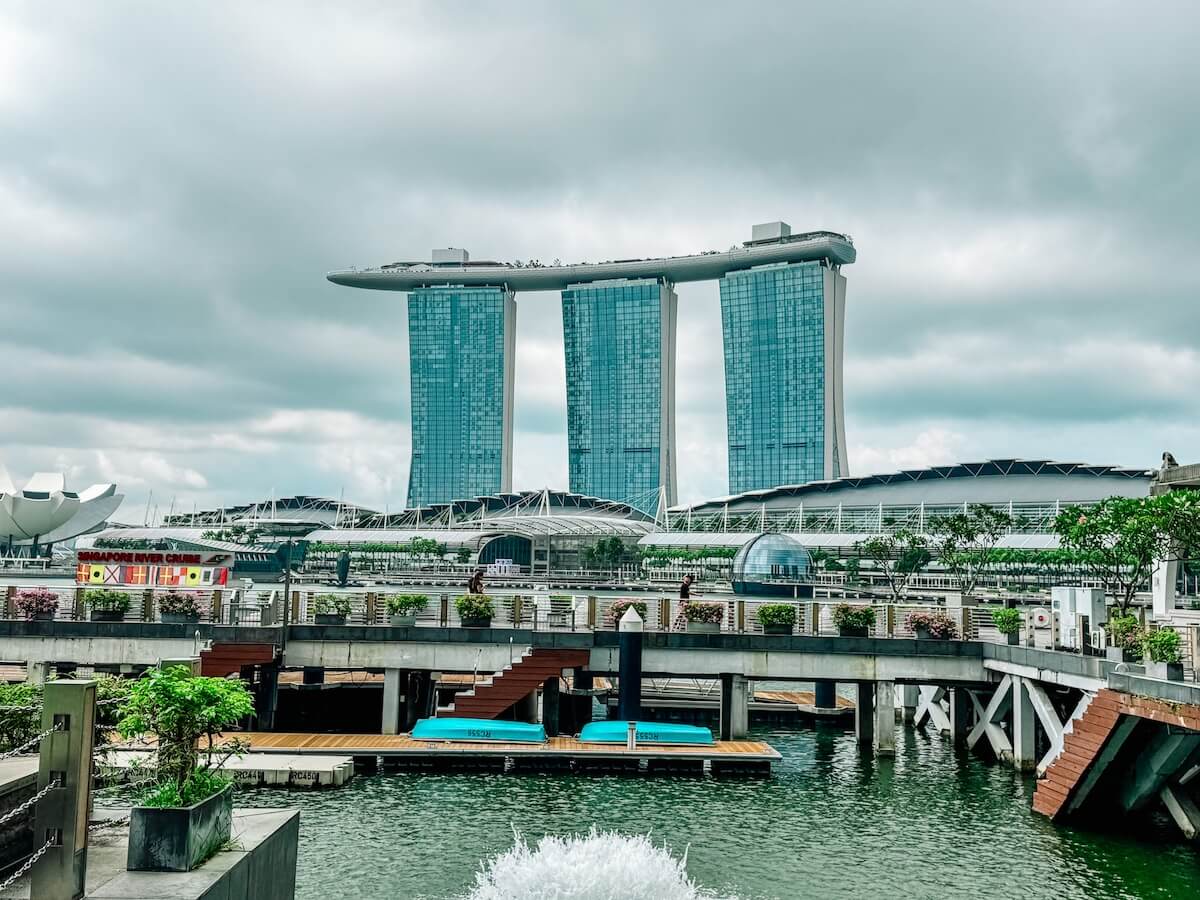
Entry & Arrival Tips (That Make A Big Difference)
Submit Your SG Arrival Card Before You Land
Every traveller entering Singapore needs to submit a free SG Arrival Card (SGAC) online. It replaced the old paper arrival card and includes a short health declaration.
- You can submit it from 3 days before your arrival date (including the day you land), so don’t leave it too late or too early, as the system won’t let you submit outside that window
- Each family member needs their own SGAC, but you can submit multiple in one sitting on the same device by pressing the add traveller option
- It’s free — only use the official ICA website or the MyICA app, not third-party paid sites
- Save the confirmation to your phone so it’s easy to find if asked
- You will get an email confirmation
We had to fill in multiple SGAC during our visit since we arrived for a few days, then left on a Disney Adventure Cruise into international waters, even though it did not have any port stops and then again for our 10-hour layover at the end of the trip.
Check Your Visa-Free Entry Length
Australian passport holders get 90 days visa-free for tourism — no visa required.
If you’re not travelling on an Australian passport, visa-free entry length and requirements vary by nationality, so check the current rules for your own country before booking — ICA’s website has the full list.
- A completed SG Arrival Card is still required regardless of visa-free status
- Passports need at least 6 months’ validity from your arrival date
First-Time Visitors Need To Enrol Biometrics On Arrival
If it’s your first time entering Singapore, expect to have your fingerprints, iris and facial biometrics taken at the immigration checkpoint.
It’s quick, but worth knowing about in advance so it’s not a surprise, especially with kids in tow.
Despite this, immigration was super quick, and it made re-entry into Singapore even faster with biometric scanning rather than needing your passport at every point. It was one of the easiest immigration processes we’ve ever had.
Apps & Connectivity Tips
Get An eSIM Before You Arrive
Having data as soon as you land makes things much easier, especially for navigation and bookings.
An eSIM is a much easier option than picking up a local SIM card. You can set it up before you leave home, and it doesn’t require you to physically insert anything. You just switch to your eSIM line in your mobile settings and turn off your home line.
We typically use Airalo for all international travel, which has been the most reliable. It worked great in Singapore.
Unlike China, Most Apps Work Here
Worth a mention if you’re coming from somewhere like China straight after (or before) Singapore, Google Maps, WhatsApp and the usual apps all work normally in Singapore. No VPN required.
Singapore Money Tips
Cards Are Widely Accepted, But Carry Some Cash For Hawker Centres
Most places in Singapore take contactless and card payments without issue. The exception is hawker centres and smaller stalls. Some are cash-only or prefer it.
We found that using credit cards often incurred a 10% fee, even for a Grab (Singapore’s version of Uber).
Of the 3 places we visited on this trip, China, Hong Kong and Singapore, surprisingly Singapore was the one that benefited most from cash. In saying that, you can totally get away without it if you don’t mind the extra fees.
For cards, we used a Wise account, which we usually do when we travel just for the convenience of switching between different currencies and great exchange rates.
Compare Exchange Rates Before You Commit
We noticed the rate can vary by a few cents on the dollar depending on where you change money, so it’s worth comparing a currency exchange counter against somewhere like Chinatown before you settle on one.
It’s not a huge difference per transaction, but it adds up if you’re changing a decent amount. And of course, airports are always the worst option for exchange rates!
Claim Your GST Back On Bigger Purchases
If you spend over S$100 at a shop displaying the “Tax Free” shopping logo, you can claim back the 7% GST before you fly out. Keep your receipts for large purchases as you will need them at the refund counter at the airport.
Eating In Singapore
Hawker Centres Are Cheaper (And Often Better) Than Restaurants
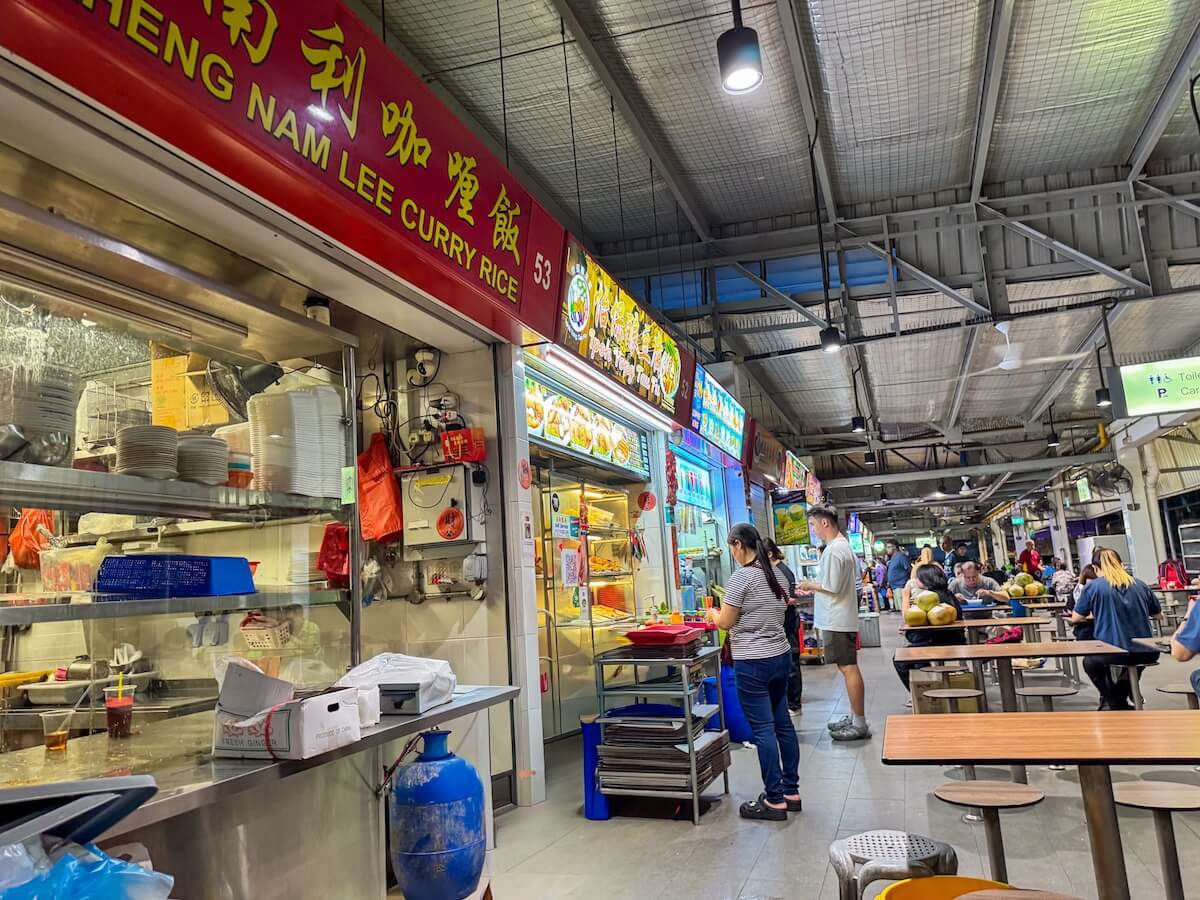
Some of the best food in Singapore comes from hawker centres, not restaurants. A meal here can cost a fraction of a sit-down restaurant price.
If you’re not sure what a Hawker Centre is, it’s like an undercover food market found commonly in Singapore and Malaysia, with many stalls within the one building.
Our favourites were Lau Pa Sat and Maxwell Food Centre, although finding a table can be challenging.
Look For The Colour-Coded Hygiene Grades
Every stall displays a grade from A to D issued by the government hygiene department. It’s a small thing, but it takes the guesswork out of picking somewhere new.
Skip Orchard Road If You’re Watching The Budget
Orchard is the expensive end of town for food. If you want the same quality for less, head to a hawker centre elsewhere. The prices can be a fraction of what you would pay in the tourist-heavy areas.
Best of all, you can find Michelin-star-rated Hawkers that are super cheap and definitely worth trying!
Dishes Worth Trying
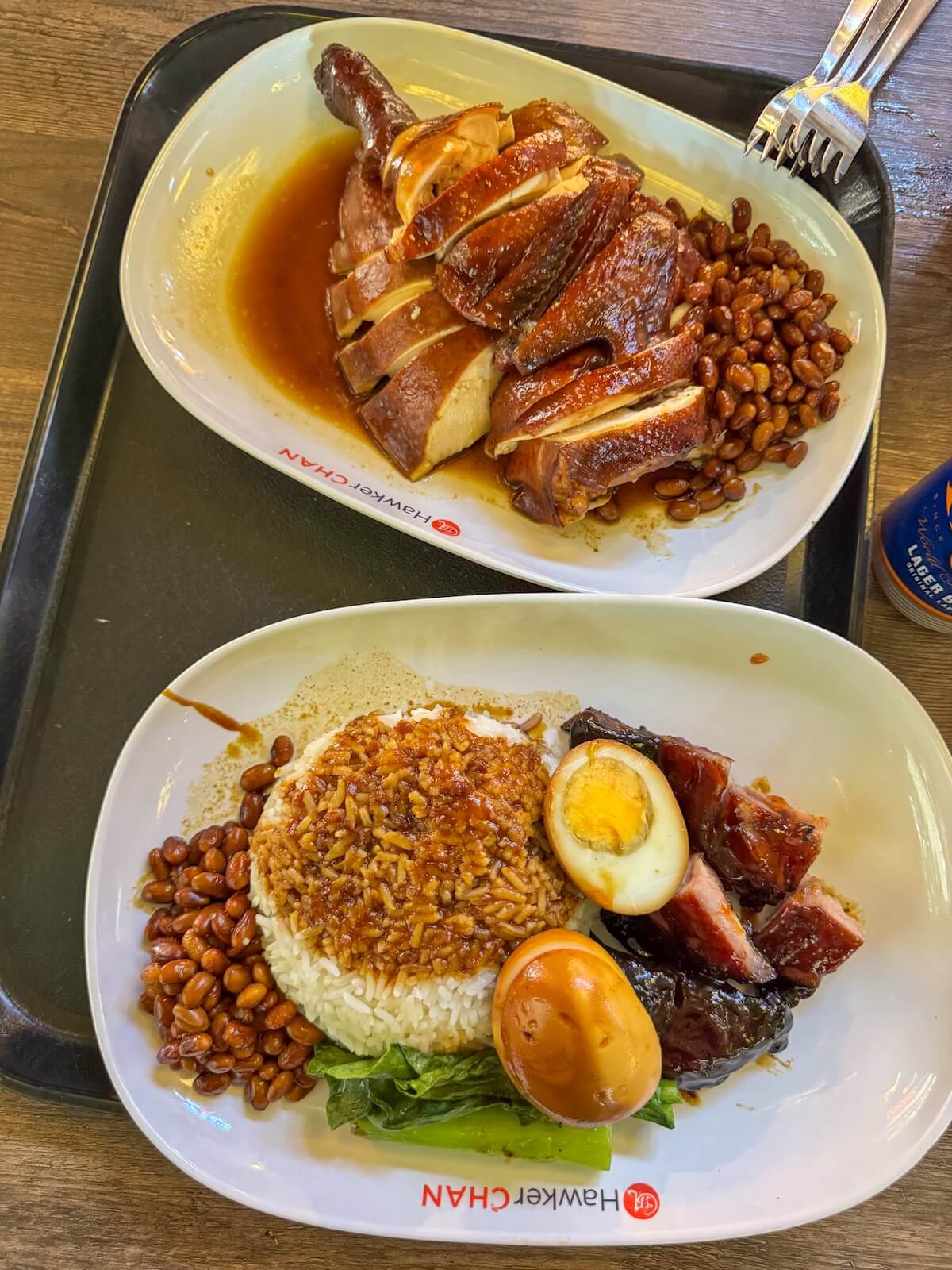
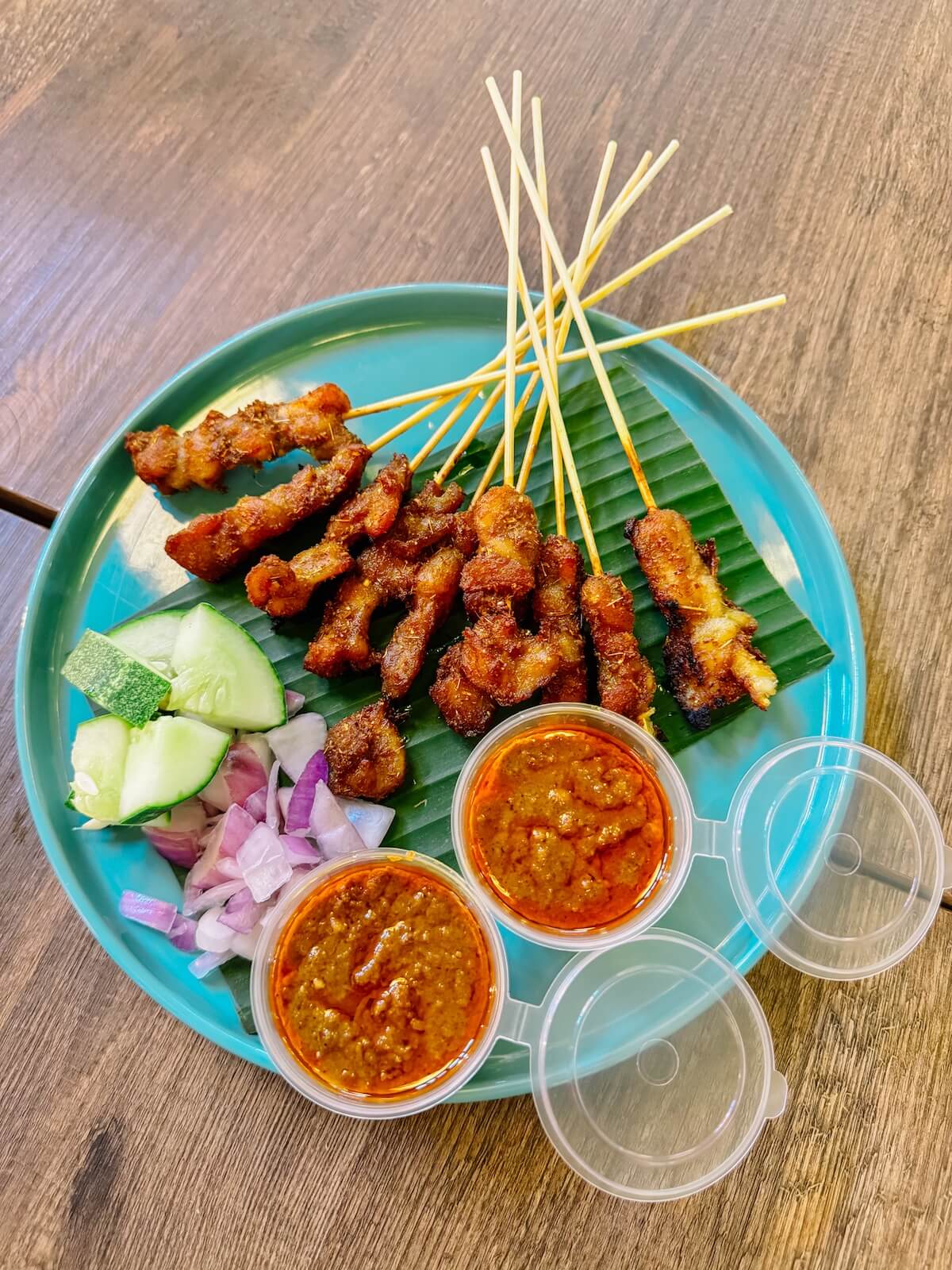
Singapore food is a fusion of flavours from several regions, with their strong Chinese, Indian and Malay influences. Some of the most popular dishes in Singapore are Hainanese chicken rice and laksa.
The other thing we loved was the satay! If you’ve got the chance, head to Lau Pa Sat after 6pm when they shut down a whole street and it turns into Satay Street and you can sample different satay stalls. Sooooo good!
One thing that surprised us about the food is that often the meat is cold on a dish you think is going to be hot. Maybe it’s because of the hot weather, but that was unexpected, like our first time trying Hainanese chicken, thinking it would be hot.
You will also find there are more bones than you might be used to as well.
A Tissue Packet On The Table Means It’s Taken
This one catches a lot of first-timers out. Locals reserve a table by leaving a packet of tissues on it, then go and order. It looks like someone left rubbish behind, but it’s actually a very effective system.
Don’t move it and don’t sit down, that table is spoken for. We noticed this when we visited Japan for the first time too.
Tap Water Is Safe To Drink
Singapore’s tap water is safe to drink straight from the tap, which isn’t something you can say for a lot of Asia.
Carry a refillable bottle rather than buying bottled water every time you’re out. This will save you a surprising amount over a few days. We would refill out empty water bottles then chill them in the bar fridge in our hotel room.
Getting Around Tips
The MRT Is The Easiest Way To Get Around
Singapore’s train network is fast, clean, air-conditioned and easy to navigate, even for first-time visitors. You can get an EZ-Link card or just tap on with a contactless card or phone.
We loved that we could just use our existing credit or debit cards to tap on and off without having to get a local transport card.
Walking Distances Can Be Deceiving
Singapore looks compact on a map, but the heat and humidity make even short walks feel longer. Factor that into how much you plan per day, especially with kids.
These are the moments you will want an umbrella for shade and a mini handheld fan can be good too. Our kids hogged ours the whole trip!
Use Grab For Rideshare
Grab is Singapore’s version of Uber or Didi. It’s not nearly as cheap as the MRT, but it is convenient, especially when you’re arriving at the airport with multiple suitcases or kids.
We did use Grab a couple of times for convenience moving between different areas of Singapore with our luggage. Just make sure you book a vehicle that is large enough to accommodate your luggage.
Grab An EZ-Link Or SimplyGo Card If You’d Rather Not Tap With Your Own Card
We used our own contactless cards to tap on and off, but if you’d prefer a dedicated transport card, you can pick up an EZ-Link or SimplyGo card from machines at the airport or MRT stations for around $10, which includes $5 of credit. Top it up with cash or card at the same machines.
A Hop-On Hop-Off Bus Is A Good First-Day Option
If you want to get your bearings without overthinking it, hop-on hop-off buses run through the city roughly once an hour from stops like Chinatown. It’s an easy way to see the lay of the land on day one before you commit to a plan.
Bike Share Is Everywhere (And Cheap)
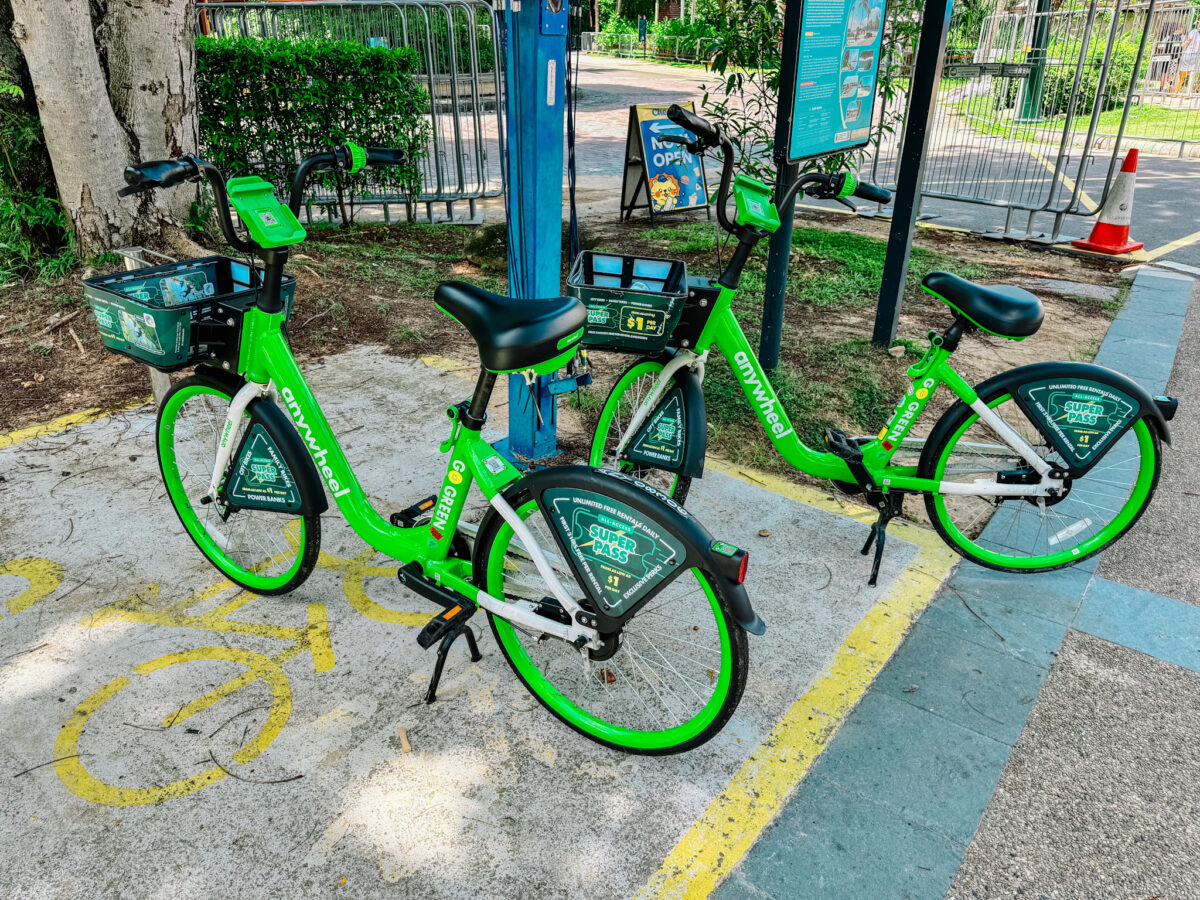
Bike share bikes, like the green Anywheel ones, are scattered all over the city. Scan the QR code on the bike to unlock it, ride to where you’re going, then scan the code at a designated parking zone to lock it and walk away.
It’s around $2 for 90 minutes and a good way to save your legs between sights. A great budget transport option for Singapore.
Buses Board At The Front, Exit From The Middle Or Back
Singapore buses don’t announce every stop, so keep an eye on where you are and press the stop button on the pole ahead of your stop.
Should You Get The Singapore Tourist Pass?
Alongside EZ-Link and SimplyGo, there’s also the Singapore Tourist Pass, a special card that gives unlimited rides on MRT, LRT and basic buses for a set number of days rather than paying per trip.
It comes in options from 1 to 5 days, with prices roughly in the $17 to $45 range plus a refundable deposit on the card itself.
The honest math on this one: it only actually saves you money if you’re doing a lot of rides in a day, somewhere around 7 or more.
A typical sightseeing day of 4 to 5 trips usually works out cheaper just tapping on with your own contactless card or a regular EZ-Link card. So it’s less a must-have and more something to consider if you know you will be criss-crossing the city constantly or doing one really big day of public transport.
It definitely wasn’t worth it for us, but we did do over 30k steps in a single day, so we probably should have caught public transport a little more on our big city day…
Search & Compare Rental Car Prices
- Discover Cars: We have used this aggregate site many times to compare rental car prices from big-name companies and get the best price possible.
- Booking.com: This is our other preferred comparison site for finding rental cars (and accommodation).
Laws & Customs Worth Knowing
Vaping And E-Cigarettes Are Illegal To Bring In
Unlike the chewing gum myth most people have heard, this one is genuinely enforced. Vapes and e-cigarettes are banned, and bringing them in (even unused) can result in fines. This came into effect from 1 May 2026.
Tipping Isn’t Expected
Most restaurants already include a service charge, and tipping on top isn’t part of the culture here.
Penalties For Things Like Littering And Jaywalking Are Taken Seriously
Singapore is famously strict about small things that are barely enforced elsewhere, such as littering, jaywalking, and eating on the MRT.
Worth a heads-up for the kids before you go and it’s not a bad thing either. We definitely noticed that as a whole, Singapore is very clean and well maintained.
Weather & Packing Tips
Singapore Is Hot And Humid All Year-Round
There’s no real “off season” for heat. Expect high temperatures and humidity whenever you visit. Pack light, breathable clothing and plan indoor breaks during the hottest part of the day.
We are from a relatively humid part of Australia, but we get winter. Singapore’s winter isn’t much different from its summer.
Pack For Sudden Downpours
Tropical rain can roll in quickly, even on a sunny day. A small travel umbrella or light rain jacket is worth keeping in your day bag. We used travel umbrellas that were lightweight for this purpose.
You will also use that umbrella for shade while walking around. It’s simply a staple for any visit to Singapore!
Best Time For Slightly Drier Weather
There’s no real dry season in Singapore, but February to April tends to be a little less wet than the rest of the year. November through January is typically the wettest stretch. “Drier” is relative though.
Don’t expect an escape from the humidity either way.
Tips For Travelling Singapore With Kids
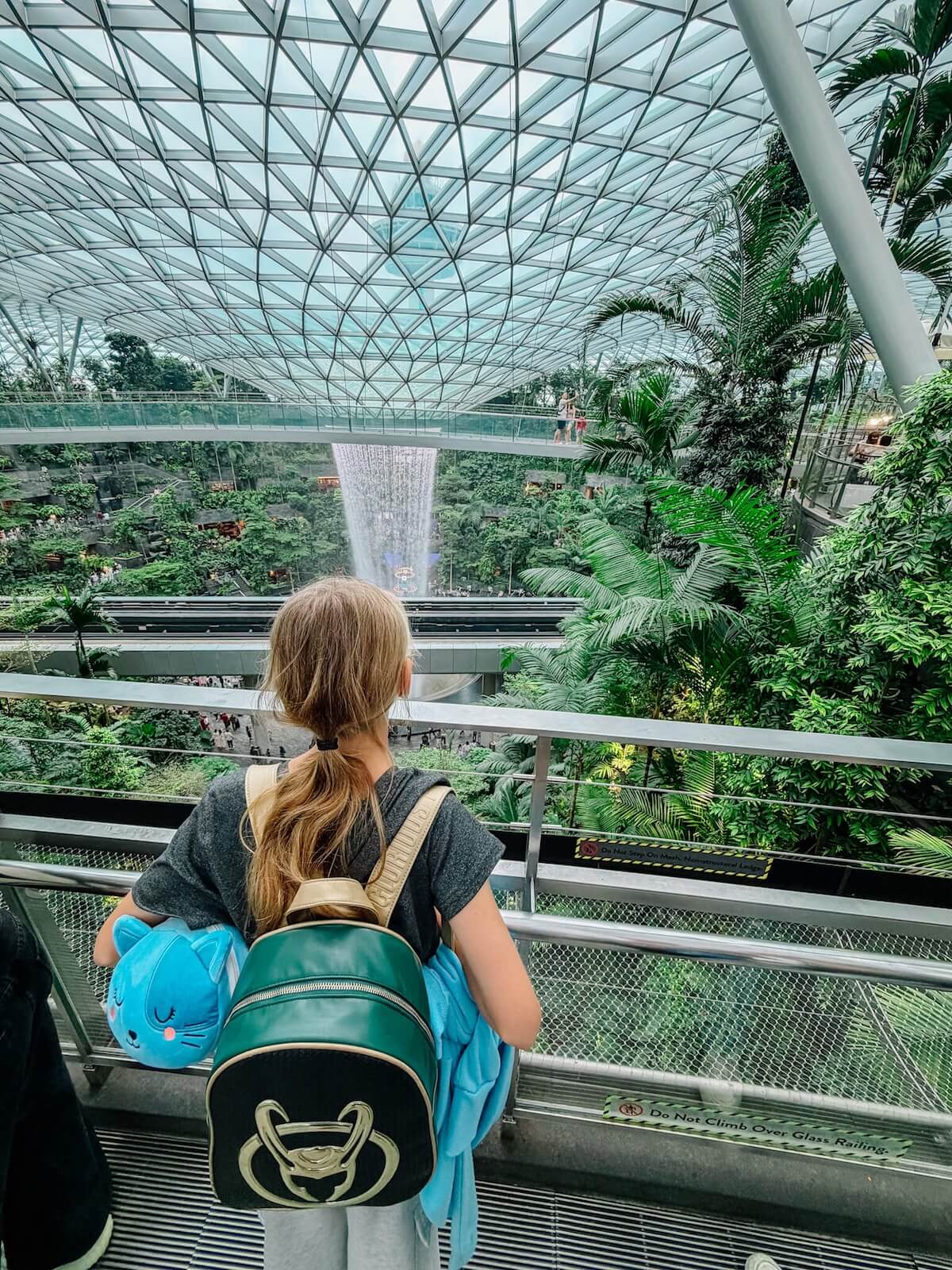
Many Attractions Are Designed With Families In Mind
Singapore is a really family-friendly destination, and that is reflected in the type of attractions on offer. While some destinations have a real nightlife vibe, Singapore is much more of an all-ages city. Even the airport is family-friendly!
However, tourism is one of their biggest things, so you should expect to pay a lot for many of the attractions.
Places like Universal Studios Singapore, Singapore Oceanarium and the Singapore Flyer are popular, and the price tag reflects this.
In saying that, there are also plenty of brilliant free attractions too, if you’re visiting Singapore on a budget.
One of the most notable is visiting Gardens By The Bay. You can walk through the outdoor areas for free and watch the free night light show at night. If you want to go inside the themed garden exhibits, that’s when the costs start to add up.
Plan Around The Heat, Not Around The Clock
With young or easily tired kids, building in midday breaks (pool, hotel, air-conditioned mall) makes a bigger difference in many parts of Asia than anywhere else we’ve travelled.
Do the outdoor stuff early or late in the day if possible and the indoor stuff right when the heat is at its peak.
Thankfully, unlike Summer in Japan, many larger hotels have swimming pools, so this will keep the kids happy on those hot afternoons.

Where To Stay In Singapore
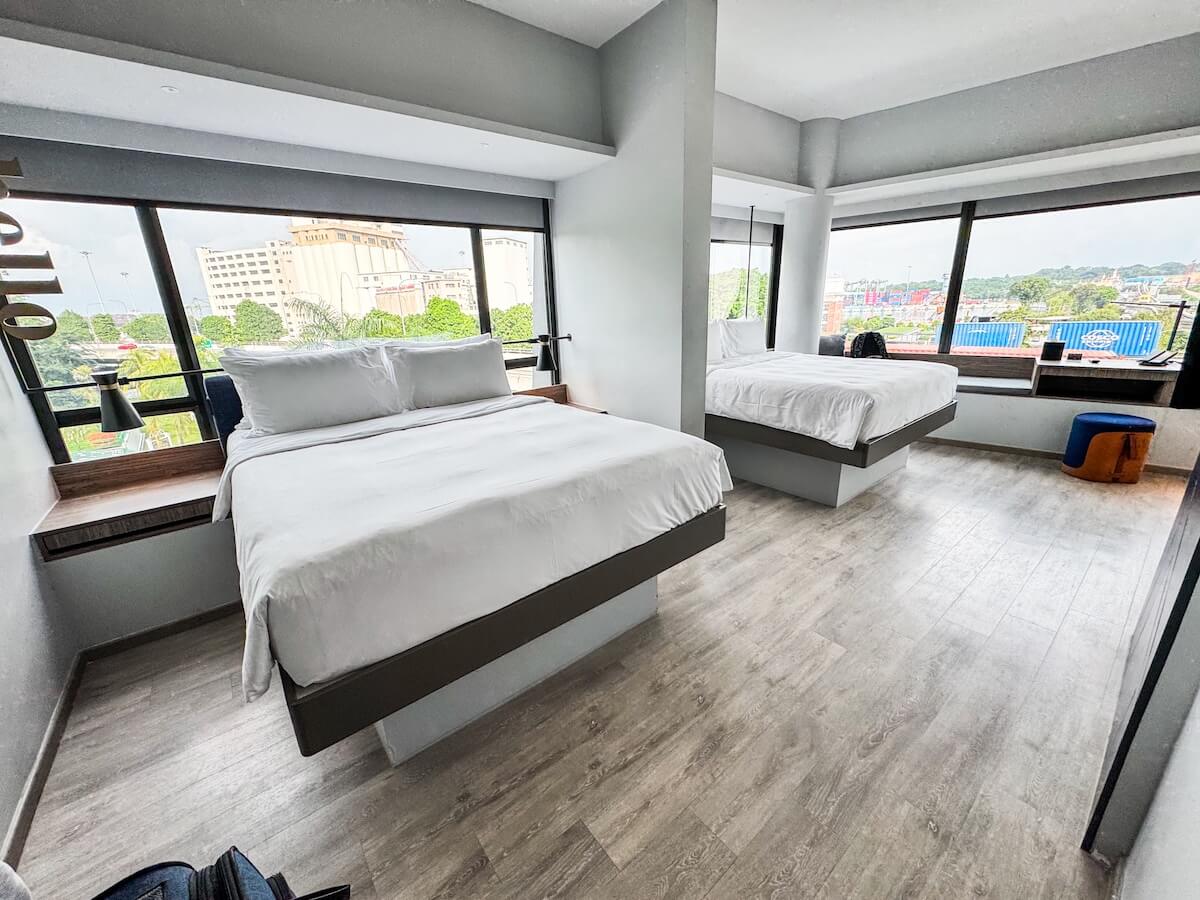
We stayed at Travelodge Harbourfront, then Mandai Rainforest Resort for our two nights near the wildlife reserve. Great for what we were doing, but neither is really “the” area most first-timers should base themselves in for the city portion of a trip, so here’s the rundown if you’re choosing somewhere different.
Marina Bay Is The Classic First-Timer Pick
If you want to be walking distance from Gardens by the Bay, the free light shows, and that postcard skyline, Marina Bay is the obvious choice. It’s also the most expensive area, so it suits people who want convenience over budget.
Chinatown Is The Better All-Rounder For Families On A Budget
Central, walkable, strong MRT connections, and you’re surrounded by hawker food rather than needing to travel for it. If we were choosing again for the city leg of the trip, this is probably where we’d look first.
Orchard Road If You Want Shopping And Still-Central
A step down in price from Marina Bay but still very central, with better MRT links than you’d expect for a shopping district. Good for families who want air-conditioned malls nearby for the hottest part of the day.
Sentosa If You Want A Resort Base For The Kids
Removed from the main city, but makes sense if beaches, the theme parks and a slower pace matter more to you than being close to the CBD.
Free Things To Do In Singapore
Singapore has a reputation for being expensive, and a lot of the big-ticket attractions do add up fast. But some of the best things we did (or wish we’d made time for) didn’t cost a cent.
It’s also worth having a few hours to spare at the airport because there are some fantastic activities to do at Changi Airport. It’s our favourite airport in the world.
Watch The Free Light Shows At Gardens By The Bay And Marina Bay Sands
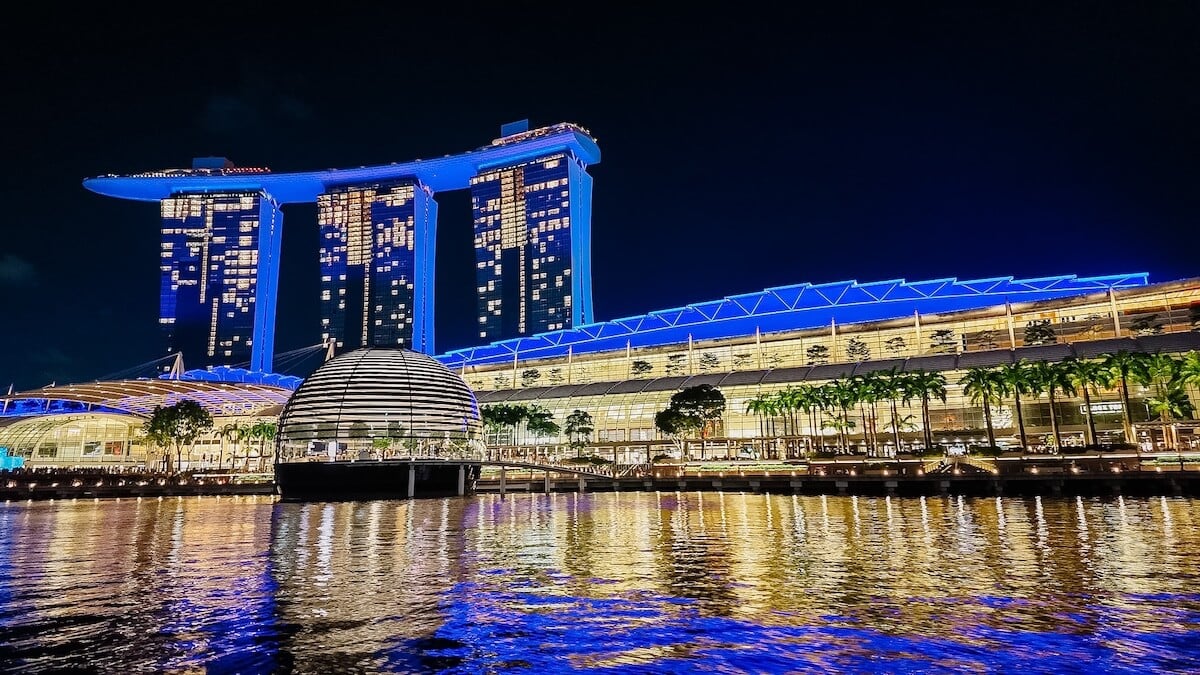
Gardens by the Bay puts on Garden Rhapsody, a free light and music show at the Supertree Grove, twice a night. Marina Bay Sands runs its own free show, Spectra, along the waterfront in front of the hotel.
You can genuinely do both in the same evening since they’re a short walk apart, just leave a bit of time to walk between them.
We did both as part of a guided Singapore night tour which made it very easy to get around and learn a lot about the city, but when you’re visiting on a budget, DIY works fine!
Walk Gardens By The Bay’s Outdoor Areas For Free
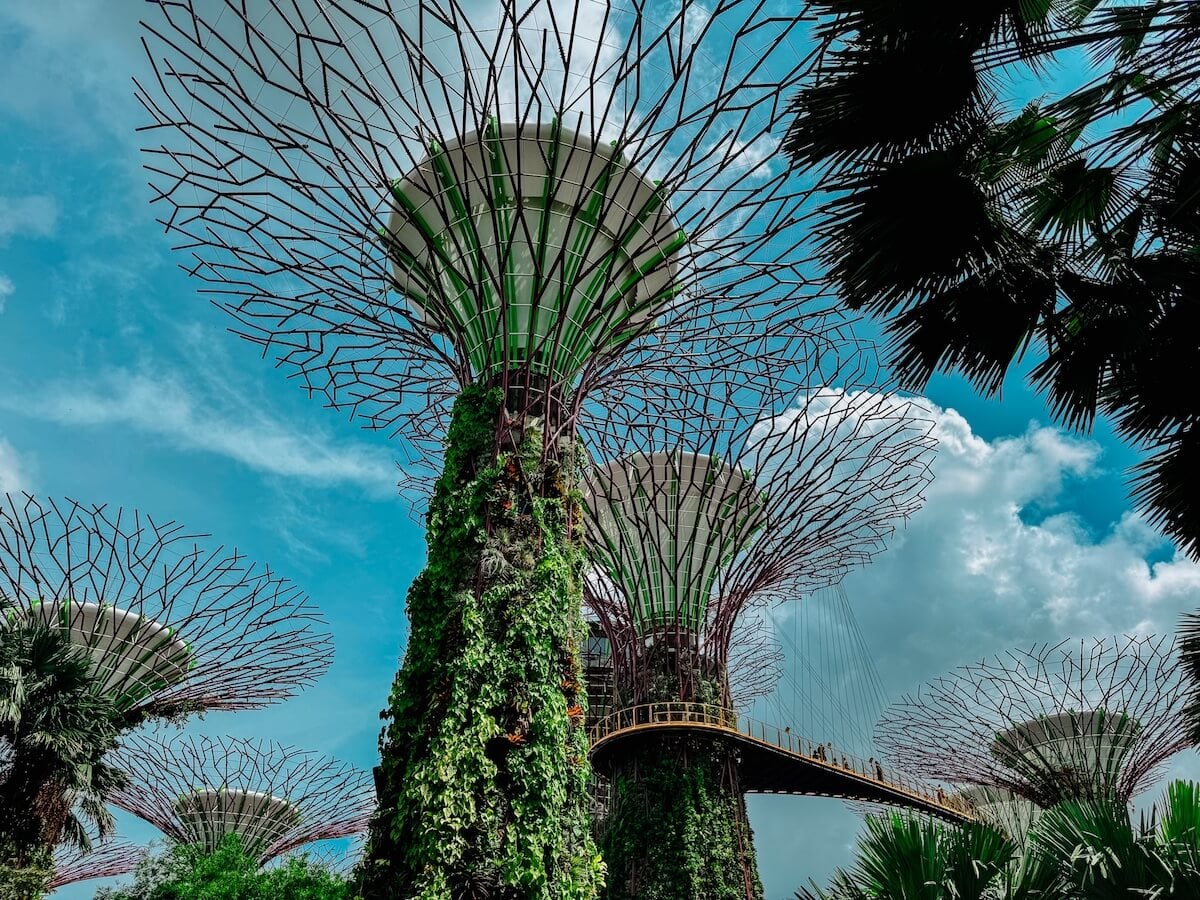
You only pay if you want to go inside Cloud Forest or Flower Dome and any of the other special exhibits within Gardens By The Bay.
The Supertree Grove and the rest of the outdoor gardens are free to walk through any time.
If you have small kids, grab a drink or a bite to eat at the Jurassic Nest Food Hall. Every half hour, several of the dinosaurs come alive and begin moving. Super fun but quite unexpected when you don’t know it’s about to happen.
Sentosa’s Beaches Don’t Cost Anything

Siloso, Palawan and Tanjong beaches are all free once you’re on the island and you can get to Sentosa pretty cheap via the monorail or public transport system.
There are also free shuttle buses that take you between the main stops on Sentosa Island and plenty to see without splurging on the expensive attractions on the island.
Playgrounds And Green Spaces
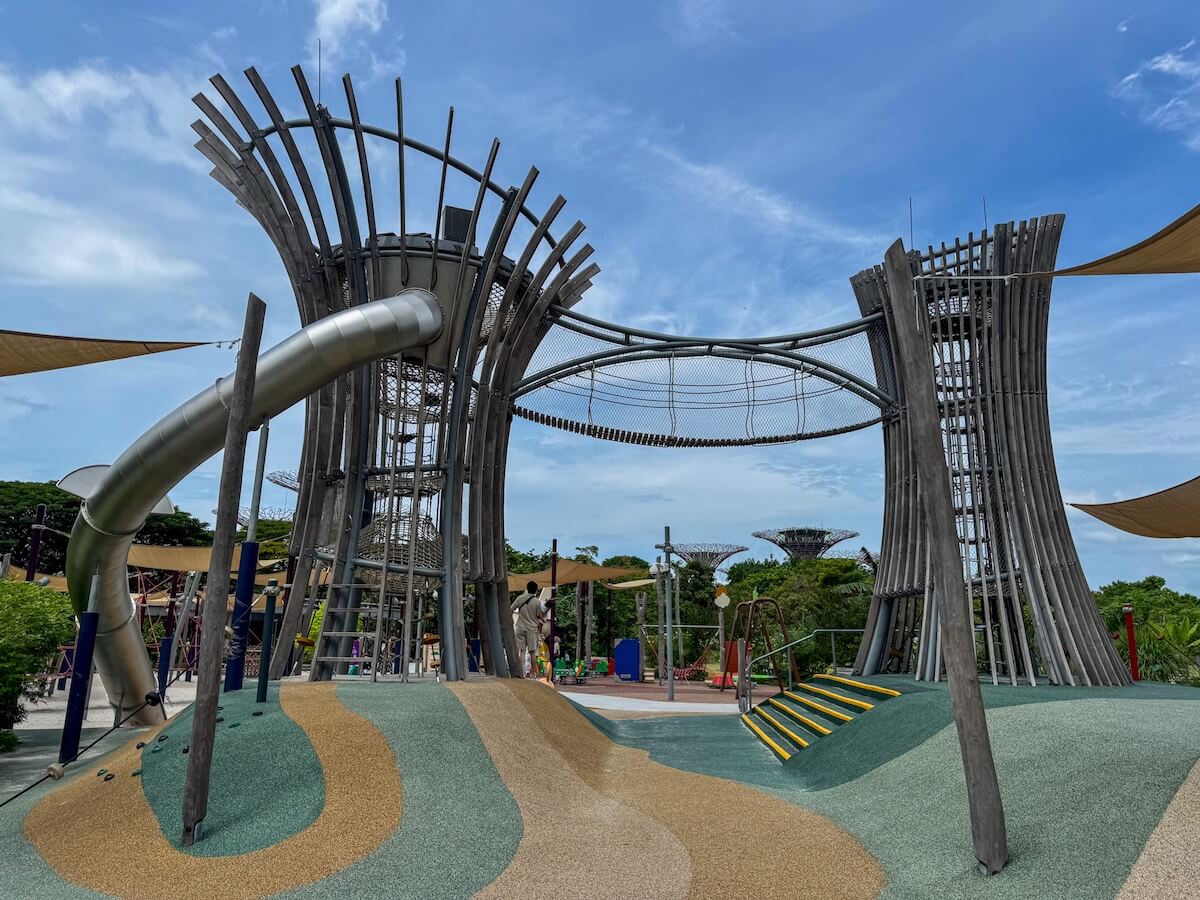
There are some fantastic playgrounds around Singapore. Our favourite was the playground near Gardens By The Bay where my youngest spent a good hour playing on the slides and climbing areas while the rest of us sat in the shade melting.
What Surprised Us Most
I expected to enjoy Singapore but perhaps loved it even more than I expected. I think the most surprising thing is how small and young the country is.
If you have never visited Asia and you are a little nervous about the potential culture shock you might get visiting some destinations in Asia, Singapore is exactly where you should start to dip your toe in.
Compared to the chaos of somewhere like China or Vietnam, it feels so much calmer, plus they predominantly speak English.
Yet it’s also a hot pot of cultural fusion which comes together beautifully.
Singapore also has a lot of green spaces, which is fantastic! Parks, nature areas, plus the whole area near Mandai Wildlife Reserve is beautiful jungle.
And for the random fact, owning a car in Singapore is a luxury to minimise the number of cars on the road. They must purchase a certificate of entitlement for 10 years, and it can cost over $100,000. Wild coming from somewhere like Australia where cars are an expected thing.
What We Would Do Differently
We had 4 days in Singapore, which included the city, Sentosa Island and 2 days at Mandai Wildlife Reserve, staying at Mandai Rainforest Resort. This meant we needed to cram a lot into our two sightseeing days.
Having 1 or 2 extra days would have been great to take it at a slower pace.
What are the biggest mistakes to avoid when travelling Singapore?
Some of the most common mistakes include:
- Trying to see too much in a short time
- Underestimating walking distances
- Not booking accommodation early
- Skipping travel insurance
- Overpacking your itinerary without considering the heat
- Packing too many clothes & accessories – go with simple comfort and light fabrics
Slowing down and allowing flexibility will make your trip much more enjoyable.
This is one thing we never travel without
Travel insurance is one of those things you hope you never need — but it’s absolutely worth having, especially when travelling with kids. For flexible coverage, we’ve used SafetyWing, and World2Cover through Klook is another solid and affordable option.
FAQ: Singapore Travel Tips
How many days do you need in Singapore?
4 to 7 days is enough time to see the best of Singapore.
Do I need a visa to visit Singapore?
Australians get 90 days visa-free, no visa needed. Other nationalities vary, so check ICA’s current list for your own passport before booking.
What is the SG Arrival Card and do I need one?
Yes, everyone needs one, and it can be submitted online within 3 days before arrival.
Is Singapore expensive to visit?
Singapore can be an expensive destination, depending on the exchange rate where you are visiting from and the type of itinerary you are planning. If you have plans to visit the popular attractions, yes, it will add up. But you can keep your costs down by staying at a mid-range hotel, using the MRT and dining at Hawker Centres or convenience stores.
Is Singapore good for travelling with kids?
Singapore is a fantastic place to visit with kids and we highly recommend it. It’s easy to get around, not overly crowded compared to many other popular destinations and they have a big focus on family attractions.
Where To Start Planning
If you’re still planning your trip, these guides will help.
- Fun things to do in Singapore with kids
- Best things to do at Changi Airport
- Singapore Airlines review
- Disney Adventure Cruise review
- South East Asia packing list
Plan Your Trip
Here are a few things we always organise before travelling:
- Stay connected: We use Airalo eSIM
- Car hire: Compare options with DiscoverCars
- Travel insurance: Check SafetyWing or World2Cover via Klook
- Airport transfers: Book with Welcome Pickups
- Accommodation: Find the best deals here
- Tours: We always use GetYourGuide